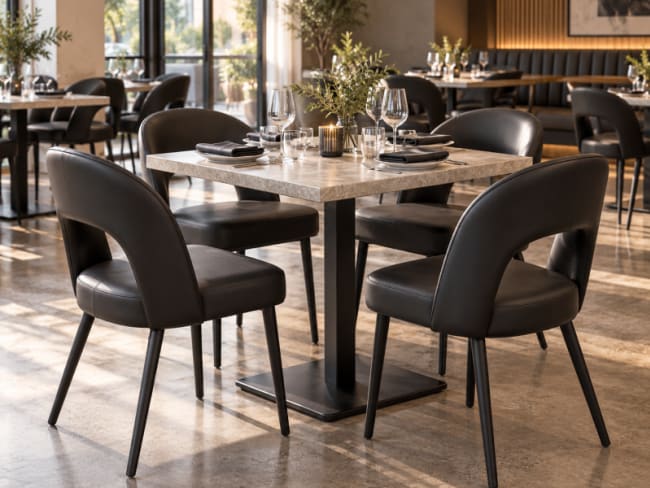
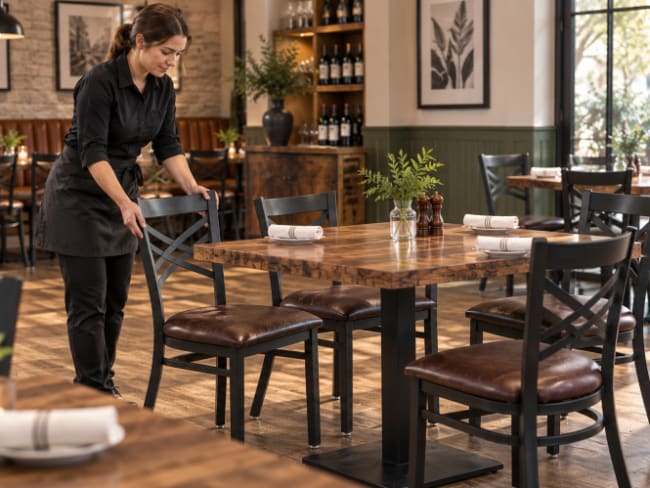
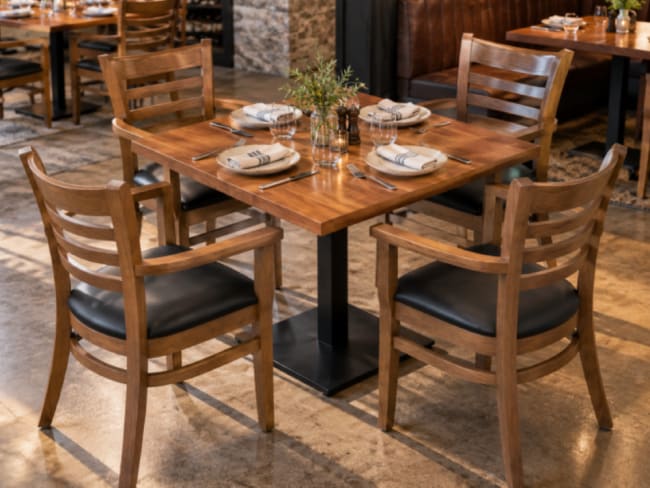
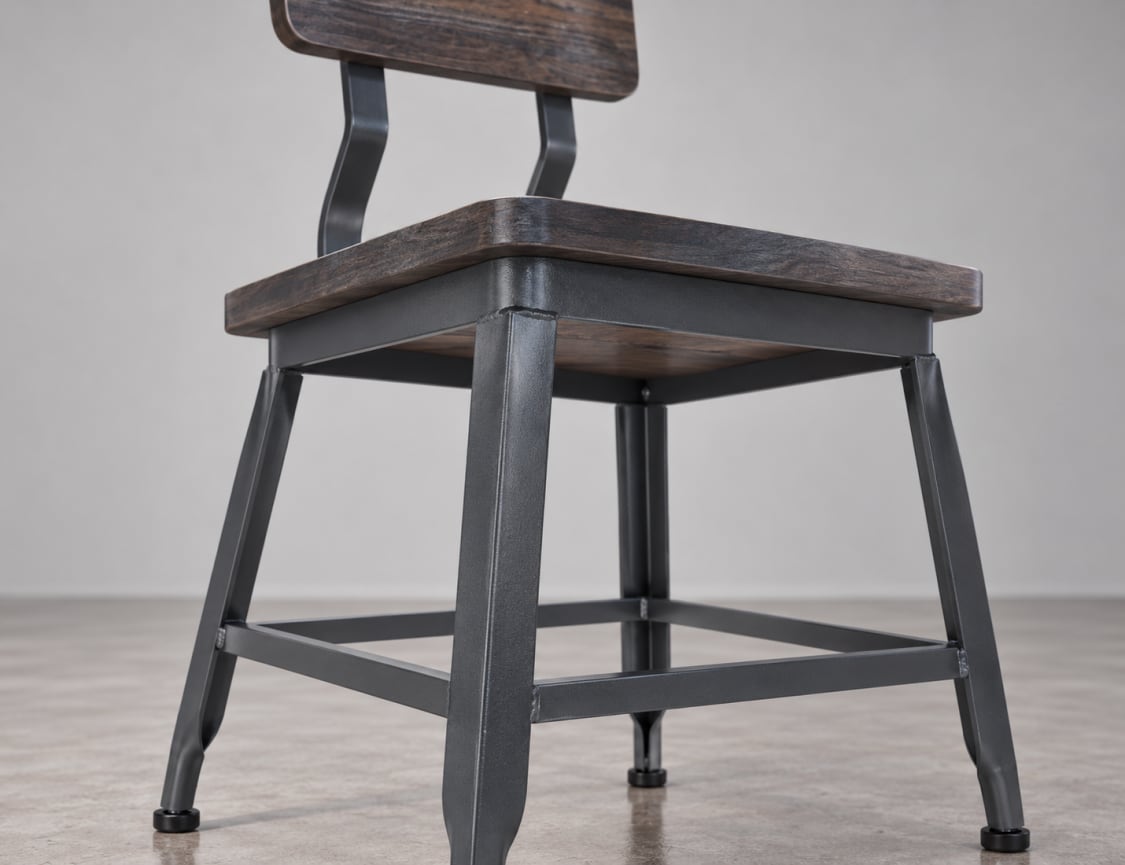
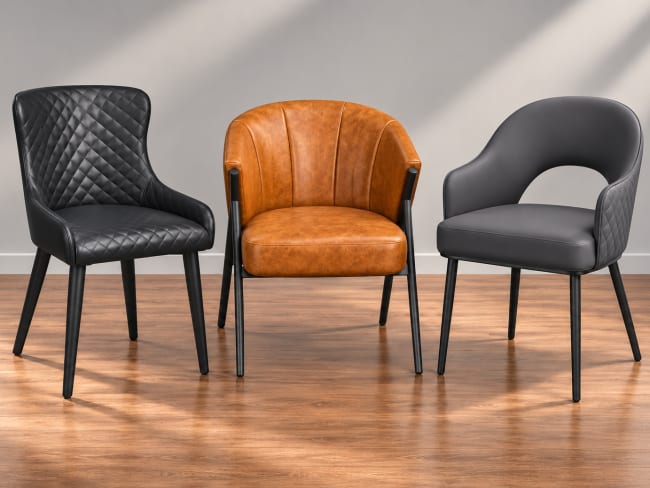
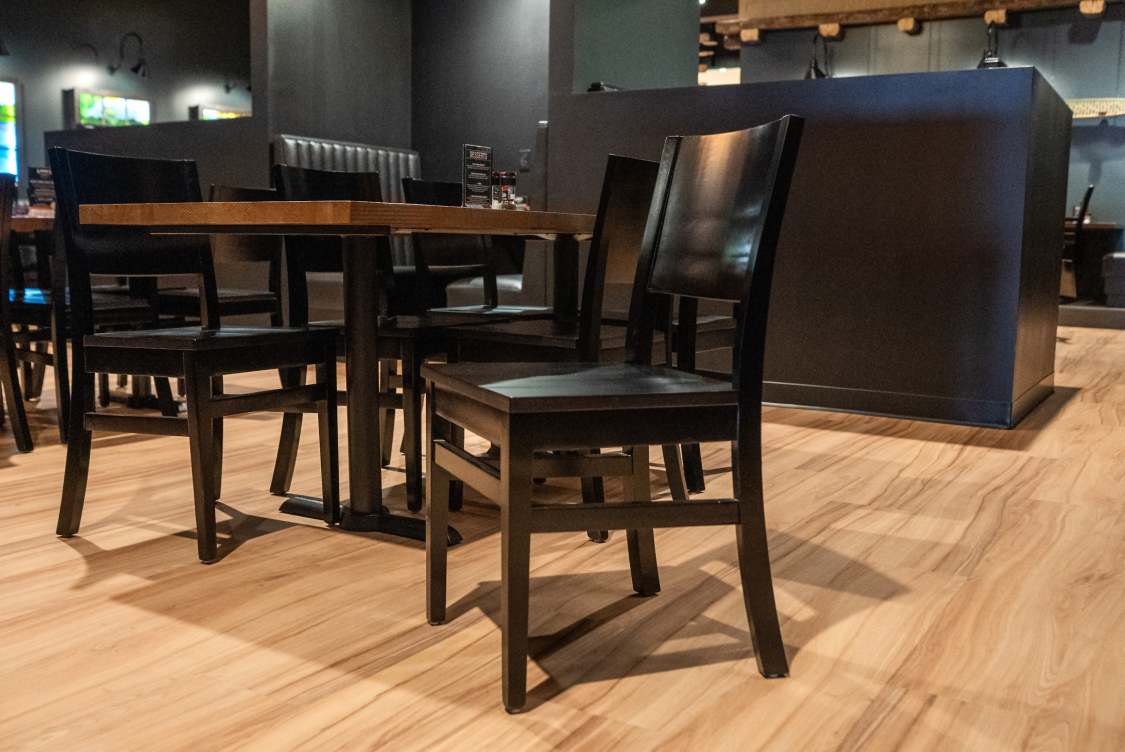
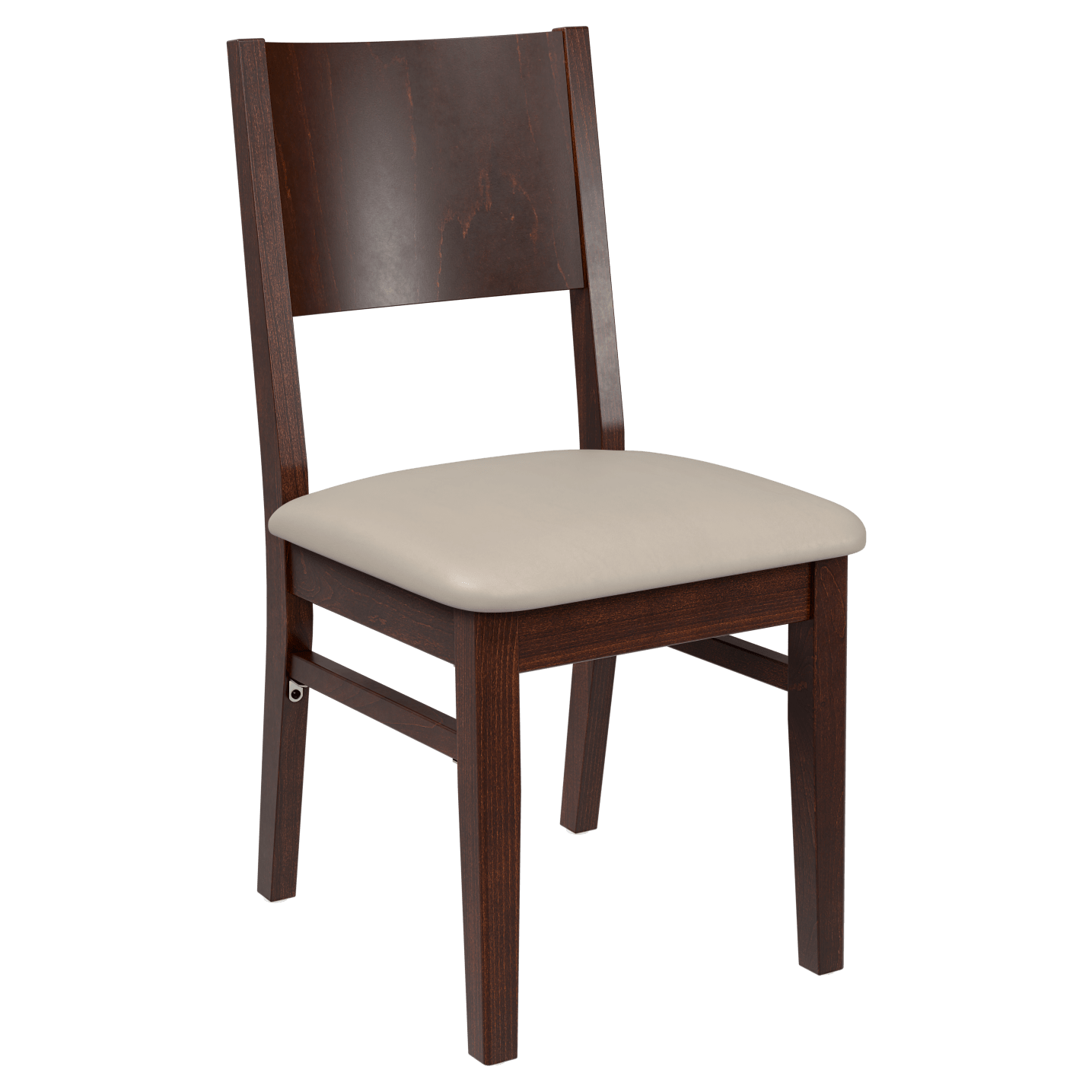
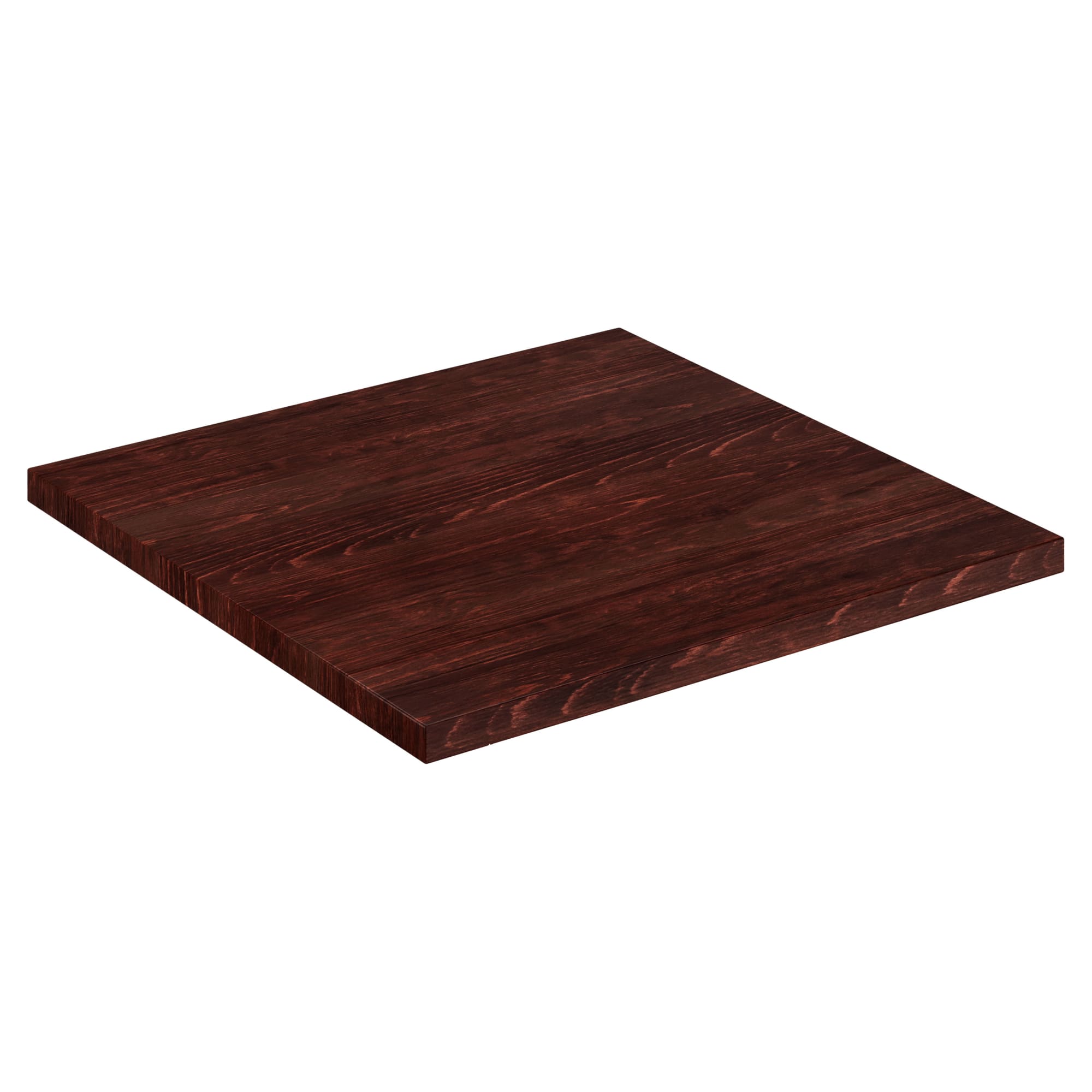
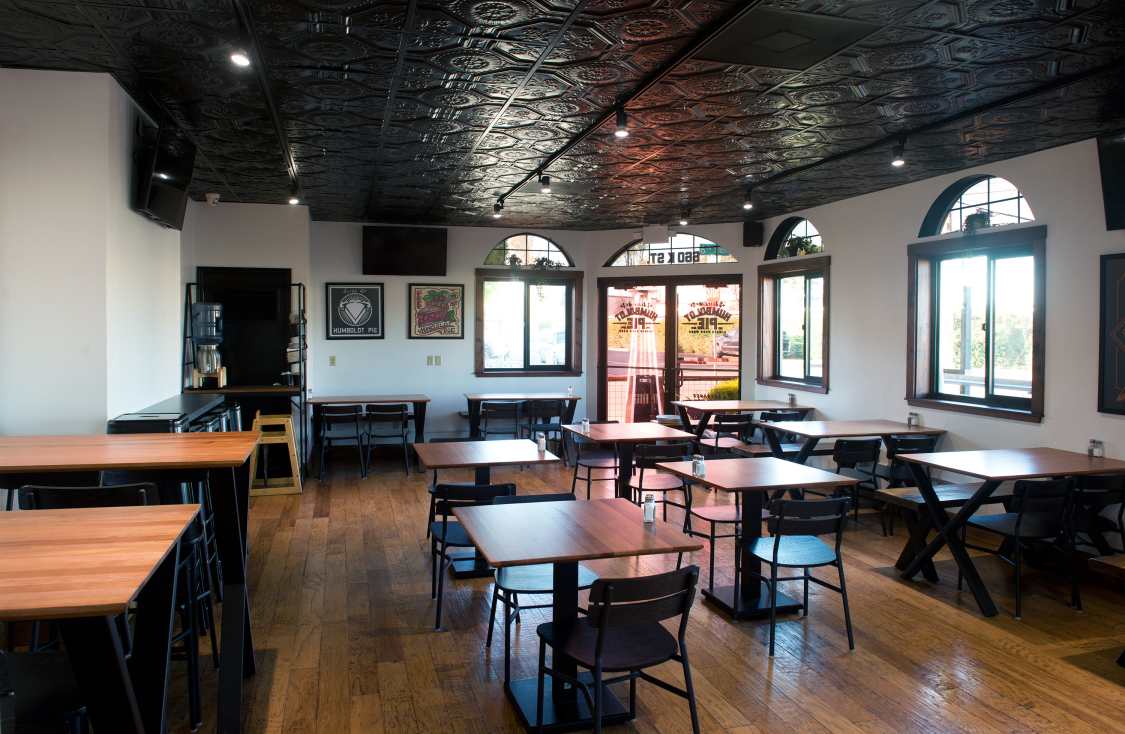
Restaurant chairs must withstand constant use, from seating guests of different sizes to being moved for cleaning and larger parties. Frame construction, materials, finishes, and seat and back design all affect durability and comfort, which is why similar-looking chairs can perform differently.
Choosing the right chair means balancing appearance with everyday practicality. Consider its width, weight, arm height and floor glides, along with table clearance and your floor plan. Prioritize features that suit your guests, staff and the way your restaurant operates.
The right chair starts with the way the restaurant operates. Two dining rooms can have similar tables, comparable décor, and even the same number of seats while placing very different demands on their chairs. One may serve guests who are in and out relatively quickly; another may expect people to remain seated through several courses. In one restaurant, chairs rarely leave their tables. In another, they are moved throughout the day as parties change and the room is reset.
Those differences affect which characteristics deserve the most attention. Comfort, chair dimensions, weight, ease of movement, and the amount of floor space each chair requires all become part of the decision. Before narrowing the choice by material or style, it helps to picture the chair during an ordinary day of service and consider how guests and staff will actually use it.
Consider How Long Guests Stay
Match Chair Comfort to Expected Dining Time
Comfort becomes increasingly noticeable with time. A chair used during a relatively short meal and one occupied through a longer dining experience may both be comfortable, but they do not necessarily need to achieve that comfort in the same way.
Seat dimensions, back support, padding, and the amount of personal space around the chair can all influence how seating feels over a longer visit. A café or quick-service restaurant still needs comfortable seating; the point is not to make shorter visits less pleasant. It is to match the level and type of support to the experience the restaurant intends to provide.
Consider How Often the Chair Moves
Plan for Daily Movement, Resetting, and Storage
Restaurant chairs spend surprisingly little time doing nothing. Guests pull them away from tables and reposition them as they sit. Staff move them to clean floors, reset seating, and accommodate different party sizes. Banquet rooms and flexible dining spaces may be rearranged far more extensively.
That makes handling part of the specification. The weight of a chair matters when employees regularly move dozens of them, while glides affect how easily chairs travel across the floor and how that movement affects the flooring beneath them. Where frequent reconfiguration is part of the operation, stackability and storage may matter as well. A chair should work not only while someone is sitting in it, but during everything that happens between guests.
Plan for Chair Space
Measure the Chair Beyond the Seating Surface
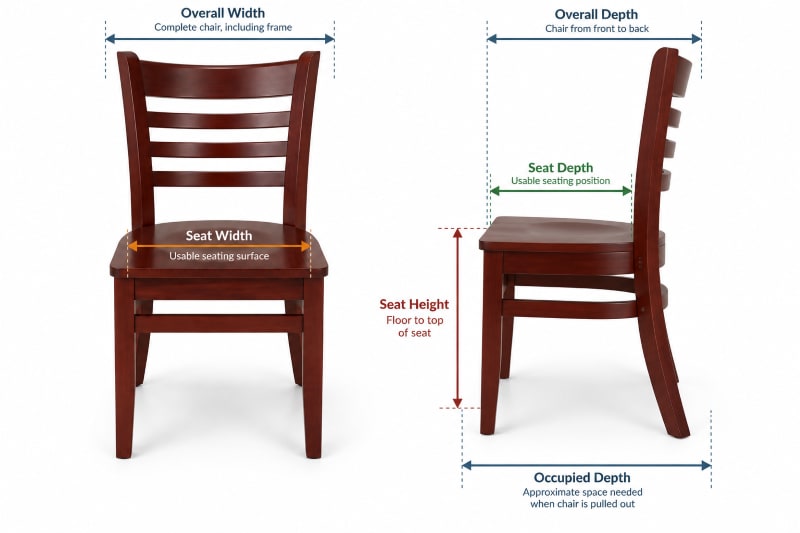
Chair dimensions can be deceptive when only the seat is considered. Seat width describes the space available to the guest; overall width describes how much space the chair itself occupies. The two measurements are not necessarily the same.
The frame may extend beyond the seat, a back can flare outward, and arms can add considerably to the chair's total width. Those differences affect how many chairs fit comfortably around a table and how closely neighboring seating positions can be arranged. The chair also takes up more room once a guest pulls it away from the table and sits down, extending its working footprint farther into the dining room.
✓
Design Takeaway
Start with the working day, not the chair style.
Before deciding what a restaurant chair should look like, establish what will happen to it. Consider how long guests are likely to remain seated, how frequently the furniture will be moved, and how much room each chair needs both at the table and in use. Those answers begin narrowing the field before color, finish, or decorative details enter the conversation.
They also raise the next question. If a chair is going to perform that job day after day, how can you tell whether it was actually built for it? That starts with understanding what makes a restaurant chair commercial.
A restaurant chair does not become commercial-grade because of its appearance, material, or weight. The distinction is in how the chair is constructed for repeated use. Every time a guest sits down, stands up, shifts position, or leans against the back, forces move through the frame and the connections holding it together. In a busy dining room, that cycle can repeat thousands of times across the furniture in a relatively short period.
There is also no single construction formula shared by every commercial chair. Wood and metal frames solve structural problems differently, and designs within either category can use different joints, reinforcement methods, finishes, and components. Product ratings and testing provide useful information when available, but they apply to the individual chair. Understanding commercial construction means looking past the category name and examining how the complete chair is built for the work it will perform.
Wood Frames and Joinery
How Frame Connections Carry Repeated Restaurant Use
A wood chair depends heavily on the places where separate pieces of the frame come together. Legs, seat rails, stretchers, and back components transfer loads through those connections whenever the chair is occupied, moved, or leaned against. Strong joinery and appropriate reinforcement help those parts continue working together rather than allowing repeated movement to loosen the frame over time.
Commercial wood chairs usually use hardwood frames and construction methods such as mortise-and-tenon joinery, reinforced joints, or corner blocks, depending on the design. No single method defines every commercial wood chair. What matters is whether the frame and its connections have been designed to handle the repeated stresses of restaurant use.
That distinction is easy to miss when comparing chairs online. A substantial-looking frame can create an impression of strength, but the visible pieces are only part of the structure. How those pieces are connected can be just as important as the material they are made from.
Metal Frames and Welds
How Frame Connections Carry Repeated Restaurant Use
Metal changes the construction, but not the underlying question. Instead of wood joints, attention shifts to the tubing, frame geometry, reinforcement, and welded connections that allow the chair to function as a complete structure.
Welds are especially important because they join components at points that repeatedly carry stress. Their placement and quality, along with the surrounding frame design and any reinforcement, affect how forces move through the chair during use. A substantial-looking frame may suggest strength, but the visible pieces are only part of the structure; how those pieces are connected matters just as much.
This is why metal should never be treated as shorthand for strong. Metal gauge, tubing dimensions, frame design, weight capacity, and testing can vary considerably between products. Those specifications should be checked for the individual chair rather than assumed from the material alone.
Finishes and High-Contact Surfaces
Where Daily Contact Places the Most Wear
Structural strength receives most of the attention when commercial construction is discussed, but restaurant chairs also have to withstand constant contact. Guests grip the back when pulling out a chair. Shoes strike stretchers and lower legs. Chair frames meet table edges and occasionally other chairs. Seats encounter clothing, spills, crumbs, and repeated cleaning throughout service.
Those interactions make the finish more than a decorative choice. Commercial-grade wood finishes and powder coatings help protect the material beneath them, while upholstery and other seat surfaces have their own requirements for wear and cleaning. Edges, corners, backs, and lower frame components deserve particular attention because they often receive contact long before the center of a surface does.
A chair can remain structurally sound while beginning to look tired in the dining room. The finish is therefore part of the working specification of the chair, not simply the color applied to it. Its suitability should be considered alongside the frame it protects.
Glides and Replaceable Components
Small Components That Affect Movement and Service Life
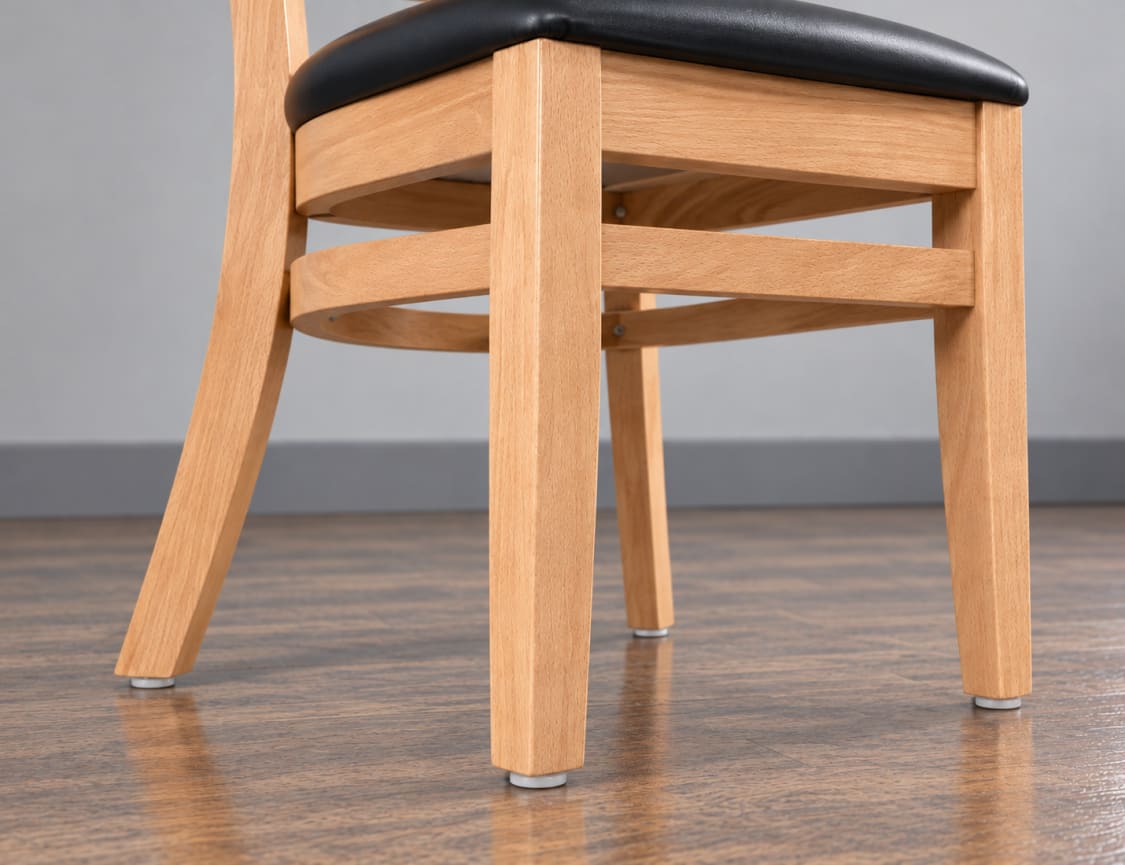
Floor glides sit between the chair legs and the flooring as guests pull their chairs out and push them back into place. The appropriate glide can help protect the floor, influence how easily the chair moves across the surface, and reduce some of the noise and friction created by repeated movement. Because glides take that wear directly, they should also be treated as components that need inspection rather than permanent parts that can be forgotten.
That raises a broader question about serviceability. Depending on the chair, glides, seats, hardware, and other components may be replaceable. Being able to address a worn or damaged component can extend the useful life of a chair that is otherwise still performing properly.
It is a small detail with a larger purchasing lesson: Which parts of this chair are likely to wear first, and what happens when they do?
✓
Design Takeaway
Commercial Grade Is a Construction Question, Not a Styling Category
A restaurant chair should be evaluated as a complete piece of working furniture. Frame design, joints or welds, reinforcement, finishes, glides, and serviceable components all contribute to how it handles repeated use. Product ratings, testing, and weight capacities can provide another layer of useful information, but those specifications need to be verified for the individual chair.
Once the construction of a chair is understood, material becomes easier to evaluate on its own terms. Wood, metal, and upholstered seating can all perform well in commercial dining rooms, but they bring different qualities to the space. Material affects appearance and feel, but it can also influence chair weight, cleaning, maintenance, finish options, and how the furniture responds to everyday use.
The category name is only a starting point. Two wood chairs can use different frame construction and finishes, just as two metal chairs can differ in tubing, welds, coatings, and overall weight. Upholstery adds another layer because it is typically applied to an underlying wood or metal structure rather than functioning as the structure itself. The useful comparison is not simply which material is better, but what each chair is made from, how it is constructed, and whether that combination suits the restaurant.
Natural Character with Commercial Construction and Finish
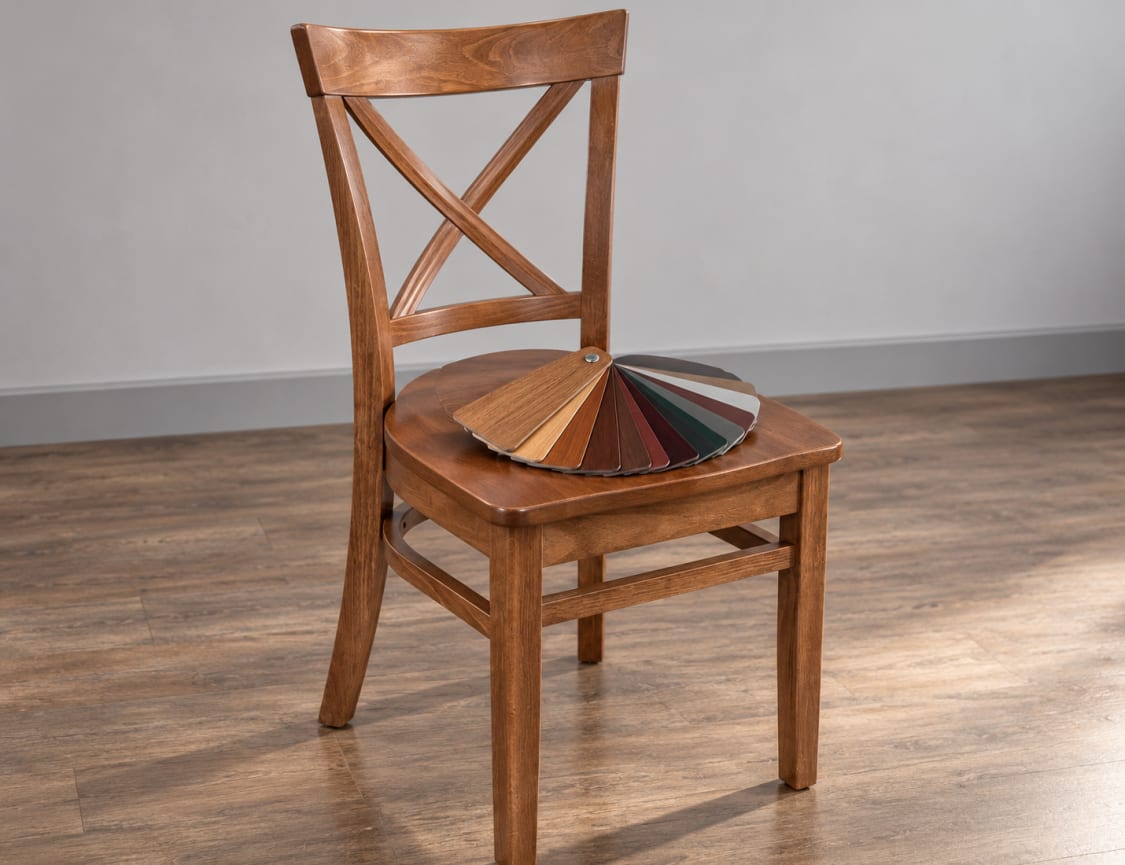
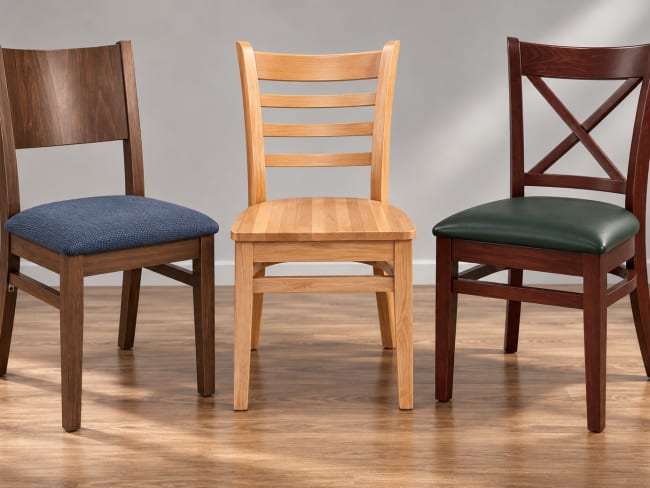
Wood restaurant chairs bring natural grain and warmth to a dining room, while different stains, finishes, back designs, and seat options allow them to work across traditional and contemporary interiors. The appearance can vary considerably depending on the wood, finish, and overall chair design.
For commercial use, look beyond species and stain color to the construction and protective finish of the individual chair. High-contact areas such as backs, seat edges, legs, and stretchers receive repeated handling and cleaning, so care should follow the manufacturer's recommendations. Indoor wood chairs should not be assumed suitable for outdoor use.
Frame Construction, Finish, and Material Differences Matter
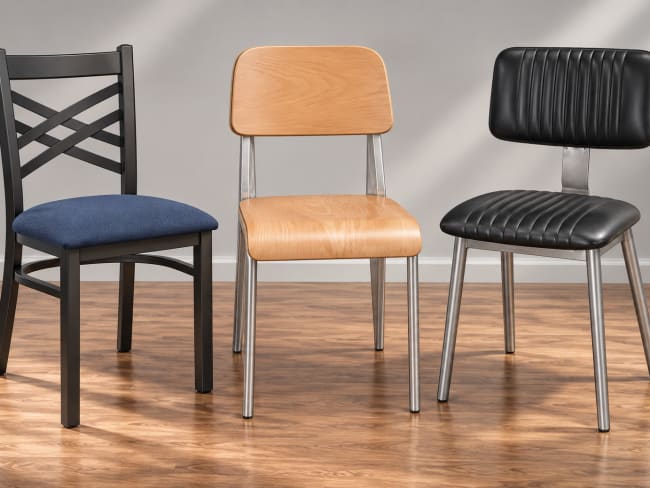
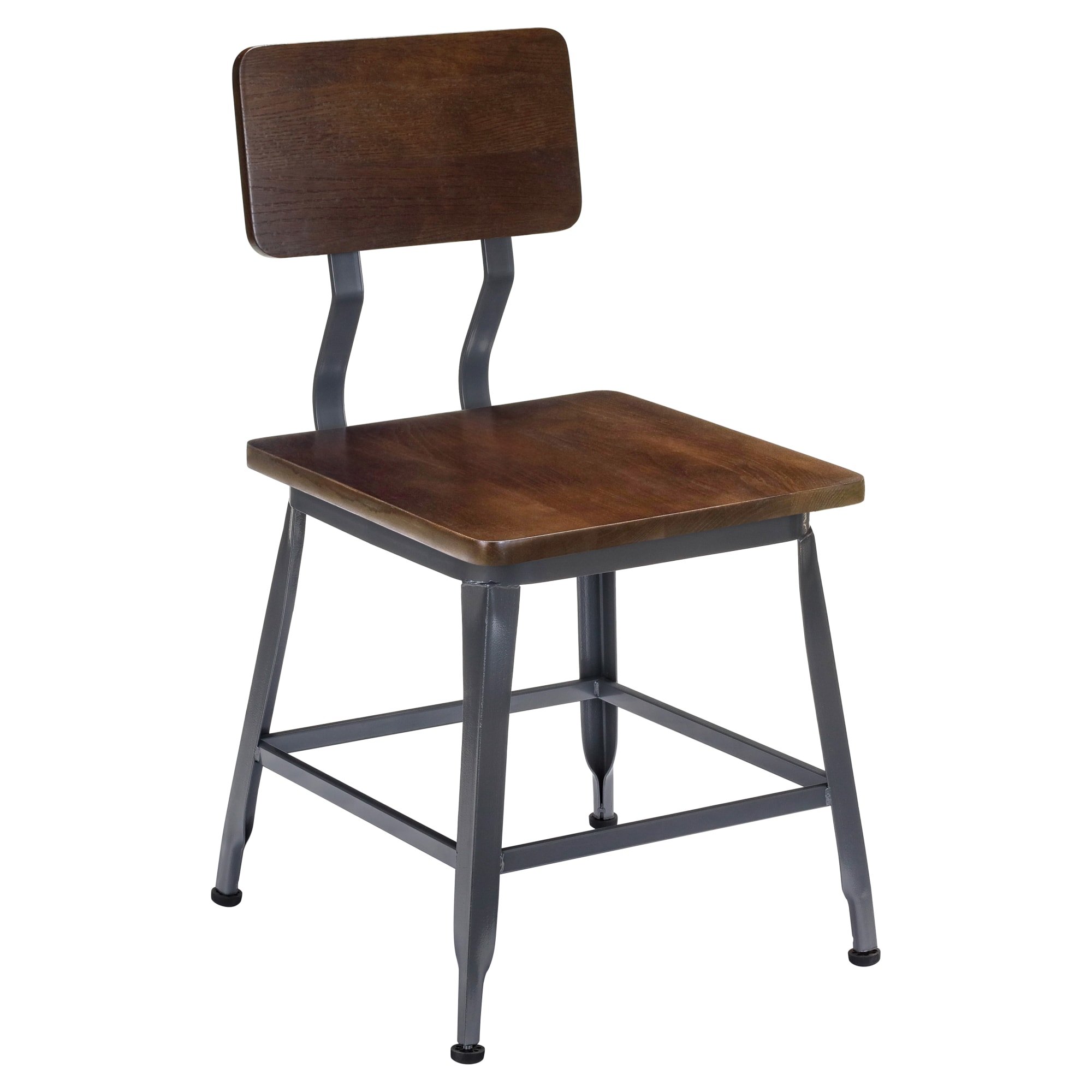
Metal restaurant chairs can work across industrial, casual, contemporary, and more refined interiors depending on the frame, finish, seat, and back design. Their relatively open frames can also provide structure without making the furniture appear overly heavy in the room.
Steel and aluminum have different characteristics, and chairs made from the same metal can still vary in tubing, welds, reinforcement, finish, and weight. A heavier chair is not automatically stronger, so compare the construction and specifications of the individual product. Metal also does not automatically mean outdoor-safe; exterior use should be confirmed in the chair's specifications.
Added Comfort with More Surface Material to Maintain
Upholstered restaurant chairs usually combine a wood or metal frame with padding and upholstery on the seat, back, or both. This allows restaurants to add cushioning, color, pattern, and texture while the underlying frame provides the chair's structure.
The specific covering matters as much as the decision to use upholstery. Vinyl, fabric, and other commercial options differ in appearance, feel, cleaning, and wear. Seams, edges, and other high-contact areas also need attention, particularly in busy dining rooms where the chairs are cleaned frequently.
✓
Design Takeaway
Material Is Only Part of the Specification
Wood, metal, and upholstered seating each bring useful characteristics to a restaurant, but the material category does not determine the quality or suitability of the chair by itself. Construction, finish, intended environment, cleaning requirements, weight, and the other materials used in the complete chair still have to be considered.
That distinction becomes especially useful when comparing products that appear similar. Instead of asking whether wood is better than metal, or whether upholstery is better than a solid seat, ask what the material contributes to this particular chair and whether those characteristics support the way the restaurant will use it.
So far, we have looked at what a chair is expected to do, how it is constructed, and what it is made from. The next part is far less subjective: how much space does it actually occupy? Chair dimensions answer that question, but only if we pay attention to which dimension we are measuring.
Seat width is not chair width. That distinction sounds minor until chairs are placed around a table. Seat width describes the usable seating surface, while overall width includes the frame, back, arms, or other parts that extend beyond it. A chair with an 18" seat can therefore require more than 18" of physical space, and the difference becomes important when several chairs have to share the same table perimeter.
The same principle applies to the other dimensions on a chair specification. Seat height helps determine how the guest sits in relation to the table. Seat depth affects the usable seating position. Overall depth describes the chair itself, but still does not tell us how far into the room it will extend once someone pulls it out and sits down. Each measurement answers a different planning question.
Restaurant Chair Dimensions
Seat width and chair width are not the same measurement.
That distinction sounds minor until chairs are placed around a table. Seat width describes the usable seating surface, while overall width includes the frame, back, arms, or other parts that extend beyond it. A chair with an 18" seat can therefore require more than 18" of physical space, and the difference becomes important when several chairs have to share the same table perimeter.
The same principle applies to the other dimensions on a chair specification. Seat height helps determine how the guest sits in relation to the table. Seat depth affects the usable seating position. Overall depth describes the chair itself, but still does not tell us how far into the room it will extend once someone pulls it out and sits down. Each measurement answers a different planning question.
Understanding Restaurant Chair Measurements
Taken together, these measurements provide a more complete picture of how a chair will fit the guest, the table, and the surrounding floor plan. The ranges below provide a useful reference for common restaurant chair dimensions, but the specifications of the individual chair should always be used when planning an actual seating arrangement.
|
Measurement
|
Typical Planning Range
|
What It Measures
|
Why It Matters
|
|
Seat Height
|
17"–19"
|
Floor to top of the seating surface
|
Coordinates the guest's seated position with standard dining-height tables
|
|
Seat Width
|
16"–20"
|
Usable width of the seating surface
|
Influences personal seating space and comfort
|
|
Seat Depth
|
16"–20"
|
Front to back of the usable seating surface
|
Affects seating position, thigh support, and comfort
|
|
Overall Width — Armless Chair
|
17"–22"
|
Widest point of the complete chair
|
Determines the chair's actual width around the table and in the floor plan
|
|
Overall Width — Armchair
|
20"–25" typical
|
Widest point including the arms
|
Requires additional table perimeter and floor space; varies considerably by design
|
|
Overall Depth
|
20"–24" typical
|
Frontmost to rearmost point of the complete chair
|
Establishes the chair's unoccupied physical footprint; occupied space will be greater
|
|
Overall Height
|
30"–36" typical
|
Floor to highest point of the chair back
|
Affects visual scale and may matter for storage or stacking
|
|
Arm Height
|
Verify Individual Chair
|
Floor to highest point of the arm
|
Determines whether an armchair can clear the table top, apron, or other underside obstruction
|
Planning Notes
These are useful ranges for conventional commercial dining chairs, not dimensional requirements. Individual restaurant chairs can legitimately fall outside them because of frame design, upholstery, arms, back shape, or specialized applications. Product specifications should control the final selection. Published commercial chair references commonly put overall restaurant-chair dimensions around 17"–20" wide, 16"–18" deep at the seat, and roughly 30"–34" overall height, but the product itself remains the authority.
The Measurement That Usually Comes First
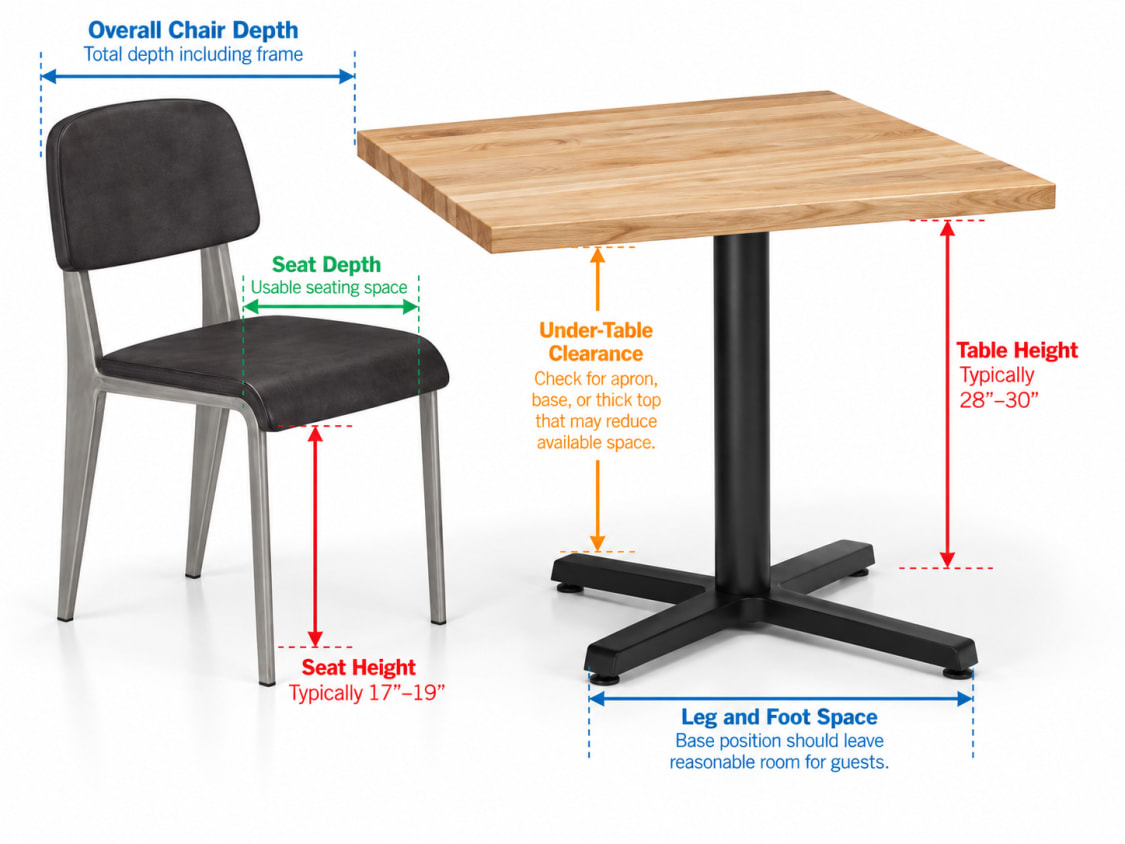
For standard dining-height seating, 17"-19" is a useful seat-height range, with approximately 18" particularly common. Standard restaurant dining tables generally fall around 28"–30" high, leaving roughly 10"–12" between the seat and tabletop in a conventional pairing.
That 10"-12" relationship is useful for preliminary planning, but the tabletop is not always the lowest point above the guest's legs. A thick top, apron, support structure, or other obstruction can reduce the usable clearance underneath. The actual table construction therefore needs to be checked before a chair is approved. We'll look at that relationship more closely in the next section.
A
Seat Dimensions
Seat Dimensions Describe the Guest Space
Seat width and depth describe the space provided to the guest, not the complete chair. A typical commercial dining chair may provide roughly 16"–20" of seat width and 16"–18" of seat depth, while the frame, back, or arms extend beyond those measurements.
-
Use seat width and depth to evaluate the usable seating space provided to the guest.
-
Remember that the frame, back, arms, or other components can extend beyond the dimensions of the seat itself.
-
Compare overall chair width when determining how much table perimeter and floor space the chair actually requires.
Two chairs with the same 18" seat can have very different overall widths, especially when arms or flared frames are involved. Use seat dimensions to evaluate guest space and overall width to determine how much room the chair requires around the table.
B
Chair Depth
Overall Depth Is Not Occupied Depth
Overall depth measures the chair from front to back, but it does not represent the full space required when the chair is being used. Once a guest pulls it away from the table and sits down, the seating position extends farther into the room.
-
Use overall depth to understand the chair's physical front-to-back dimension when unoccupied.
-
Account separately for the additional space created when a guest pulls the chair away from the table and sits down.
-
Check the occupied seating position against service aisles, neighboring tables, and back-to-back seating.
Overall depth describes the chair itself; occupied depth describes the space it uses during service. Use overall depth to understand the chair's physical size, then account separately for its occupied position when planning the dining room.
C
Armchair Clearance
Armchairs Require One More Check
Armchairs add both width and another important measurement: arm height. A chair can have the correct seat height and still fail to tuck beneath the table because its arms meet the table edge, apron, or another structure underneath.
-
Include the arms when checking the chair's complete overall width and required table perimeter.
-
Compare the highest point of the chair arm with the lowest obstruction beneath the table.
-
Check the actual table construction for aprons, thick tops, supports, or other elements that may reduce available clearance.
Do not judge armchair clearance from tabletop height alone. The actual chair and table dimensions determine whether the two pieces will fit together properly.
✓
Design Takeaway
Measure the Whole Chair, Not Just the Place Where the Guest Sits
Restaurant chair dimensions describe several different spaces at once. Seat height, width, and depth help us understand the guest's seating position. Overall width and depth tell us what the furniture itself occupies. Arm height introduces another clearance that has to be coordinated with the table.
That distinction becomes especially useful when comparing products that appear similar. Instead of asking whether wood is better than metal, or whether upholstery is better than a solid seat, ask what the material contributes to this particular chair and whether those characteristics support the way the restaurant will use it.
Typical ranges are useful for narrowing a selection, but they should never replace the dimensional drawing or specifications of the chair being ordered. A difference of 1" may seem insignificant on a product page; repeated across a row of chairs or around several tables, it can materially change how the dining room fits together.
Restaurant chairs and tables are usually specified as separate products, but the guest never experiences them that way. Once someone sits down, the 2 pieces become a single seating position. The height of the seat affects the space beneath the tabletop, the width of the chair determines how much room it requires around the table, and the table base influences where legs, feet, and chairs can comfortably go.
This is where individually correct dimensions have to work together. A chair can be appropriately sized and a table can be perfectly suitable for commercial dining, yet the combination can still create poor clearance, awkward seating positions, or less usable capacity than expected. Before quantities are finalized, the chair and table should be checked as a pair.
The Chair Has to Fit More Than the Guest
Match the Chair to the Table and Surrounding Space
A restaurant chair also has to fit the table. Standard dining chairs commonly have 17"–19" seat heights, while dining tables are generally 28"–30" high. Beyond height, check the actual underside clearance, particularly when a thick top or apron reduces the available space.
Overall chair width determines how much table perimeter each seat requires, while armchairs need enough clearance to fit beneath the table. The base matters too: its position and footprint should leave reasonable space for guests' legs, feet, and chair placement.
Evaluate the chair and table as a complete seating position. The goal is not simply to make the pieces fit, but to give the guest enough space to sit and dine comfortably.
✓
Design Takeaway
Specify the Seating Position, Not Just the Pieces
A chair and table can each be correctly specified on their own and still make a poor pair. Seat height has to work with table height and underside clearance. Chair width has to work with the available perimeter. Arms need somewhere to go, and the table base cannot claim the same space needed by the guest.
Checking those relationships before ordering is much easier than discovering them after a dining room has been furnished. Once the geometry works, however, dimensions stop being the main question. The chair may fit the table perfectly; the guest still has to be comfortable sitting in it.
Comfort is easy to describe and surprisingly difficult to specify. It does not come from padding alone, nor can it be reduced to a single chair dimension. Seat width and depth, the shape and construction of the seat, back support, posture, and the amount of personal space around the chair all contribute to what a guest experiences once seated.
Time changes that experience as well. A chair that feels perfectly comfortable during the first few minutes may become less forgiving over a longer meal, while a heavily padded chair is not automatically the better choice for every restaurant. The goal is to understand where the chair supports the guest, how it distributes that support, and how long the seating position is likely to be used.
Seat Construction
Balance Padding, Support, and Maintenance Needs
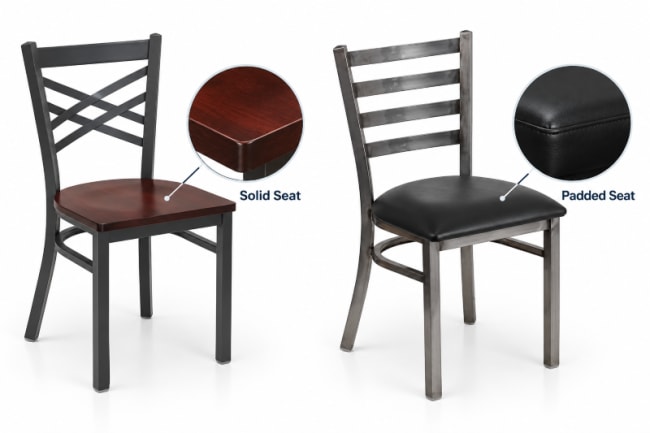
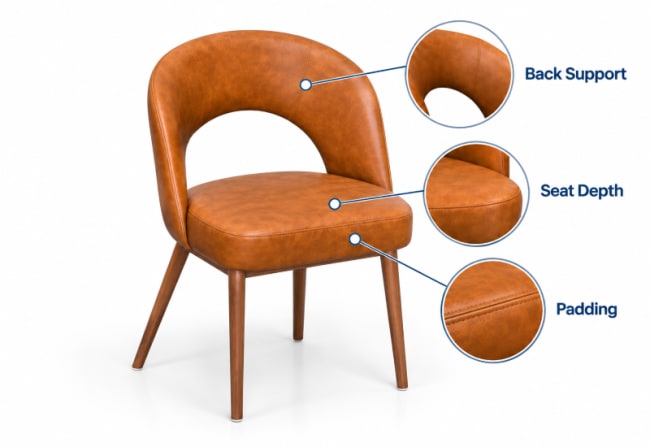
Solid and padded seats can both be comfortable when the dimensions and shape provide appropriate support. Upholstery adds cushioning, but padding alone does not make a chair more comfortable.
Solid wood or metal seats generally have fewer seams and layers to maintain, while padded seats add upholstery, edges, and seams that require additional care. Choose the construction that fits both the dining experience and the restaurant's maintenance needs.
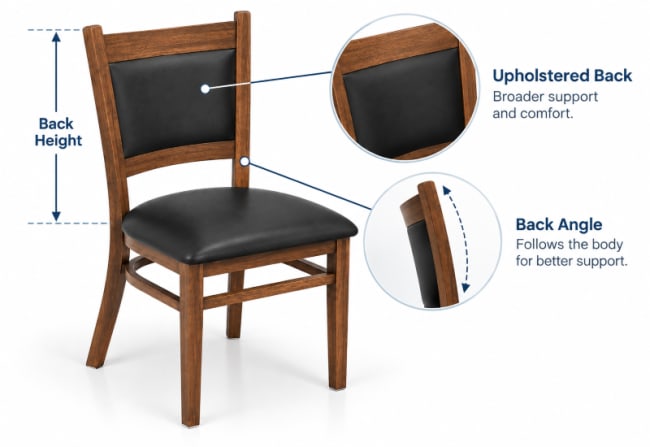
Back Support
Shape and Proportions Determine How the Back Supports
The shape, height, and angle of a chair back affect how it supports the guest. Open and slat backs can provide support with less visual weight, while solid and upholstered backs provide broader contact surfaces.
The actual shape and proportions matter more to comfort than the style name. Back construction can also affect chair weight, cleaning, and the surfaces that receive repeated contact during daily use.
Length of Stay
Match Comfort Considerations to Expected Dining Time
Guests tend to notice seat depth, back support, padding, and pressure points more as the time spent in a chair increases. Seating for longer meals may therefore require greater attention to these comfort characteristics.
Shorter visits still require comfortable seating. Expected dining time simply helps determine which aspects of comfort matter most for the restaurant and its guests.
✓
Design Takeaway
Comfort is a relationship between the chair and the time spent in it.
Seat construction, back support, dimensions, and personal space work together rather than independently. Padding can change the experience, but it cannot correct poor proportions, and a solid seat should not automatically be interpreted as uncomfortable. The better specification is the one that provides appropriate support for the way guests are expected to use the chair.
That also means comfort cannot be considered entirely apart from the restaurant itself. The same characteristics do not carry equal importance in every operation. A coffee shop, fast-casual dining room, full-service restaurant, and banquet venue ask different things of their seating.
We have now looked at the chair from the guest's perspective. Next, we can widen the view and see how those decisions change when the chair goes to work in different restaurant settings.
Restaurant type does not change the basic requirements of a good chair, but it can change their order of importance. A compact café may place a premium on efficient dimensions and easy rearrangement, while a full-service dining room may give more weight to upholstery, personal space, and comfort over a longer meal. A banquet venue introduces another requirement entirely: dozens or even hundreds of chairs may need to move and store as efficiently as they seat guests.
This is where the earlier decisions about construction, materials, dimensions, and comfort become useful. Instead of choosing a chair because it belongs to a particular style category, look for the characteristics that support the operation. Side chairs, upholstered chairs, armchairs, and stack chairs are not competing answers to the same question. They solve different seating problems.
Cafés and Coffee Shops
Flexible Seating for Smaller Tables and Varied Visits
Coffee shop seating has to use space efficiently while accommodating different kinds of visits. Compact side chairs work well around smaller tables and can be moved when tables are combined or the room is rearranged.
Wood can bring warmth to a café, while metal frames can create a lighter or more contemporary look. Restaurant booths and upholstered seats make sense where longer visits are common. Whatever the material, overall chair width should work with the smaller tables and tighter layouts often found in cafés.
Chair weight and glides also matter when furniture moves regularly. Stackability can be useful when seating is periodically removed or stored, but it only needs to be a priority when the operation will actually use it.
Fast Casual and Quick Service
Durable Seating for Frequent Use, Cleaning, and Resetting
Fast-casual and quick-service chairs go through a repeated cycle of use, cleaning, and resetting throughout the day. Durable commercial construction, practical dimensions, and surfaces that can be maintained efficiently are especially useful in these environments.
Armless side chairs can help make efficient use of table space, while wood and metal options can both work depending on the restaurant. Chair weight and replaceable glides are also worth considering when seating is moved frequently for guests and cleaning.
Footprint matters just as much as durability. An unnecessarily wide or deep chair takes space away from circulation and neighboring seating, so the chair should fit the table and floor plan without making a busy dining room feel tighter.
Full-Service and Fine Dining
Comfort and Character for Longer Dining Experiences
Longer dining experiences place greater emphasis on seat proportions, back support, personal space, and comfort. Upholstered seats and backs can add cushioning, while wood, metal, and mixed-material frames provide a wide range of options for the room's design.
Chair appearance also tends to carry more weight in a full-service dining room. Back shape, upholstery, finish, and frame details can contribute substantially to the character of the interior. Armchairs can work well where their additional width has been planned into the table arrangement.
Comfort and appearance still have to work alongside practical requirements. Upholstery needs appropriate care, finishes must withstand regular contact, and every chair still needs to fit its table and hold up to commercial use.
Neighborhood Restaurants and Casual Dining
Versatile Seating for Everyday Dining and Mixed Groups
Neighborhood and casual restaurants often serve a broad mix of guests, party sizes, and dining occasions. Chairs need to work comfortably around everyday two-tops and four-tops while fitting a dining room with different table sizes and seating arrangements.
Armless chairs can provide flexibility around smaller tables, while wood, metal, and upholstered options can all work depending on the restaurant and expected dining time. Overall width and depth matter where tables are positioned relatively close together.
Regular use also puts construction and finishes to work throughout the week. Choose commercial chairs with comfortable proportions, appropriate materials, and dimensions that work with the tables and surrounding circulation space.
Specialty Applications: When the Environment Changes the Chair
Not every restaurant chair needs to remain movable. Fixed and bolt-down seating can make sense where the floor plan calls for permanent seating positions and the furniture is specifically designed for that installation. These applications should be planned alongside the table location and circulation pattern because repositioning the chair later is no longer part of the equation.
Outdoor seating introduces a different qualification. Wood, metal, or plastic construction alone does not make a chair suitable for exterior use. Moisture, sunlight, temperature changes, and the conditions of the particular installation place different demands on materials and finishes. If a chair will be used outside, confirm that the complete product, not simply its primary material, is approved for the intended environment.
✓
Design Takeaway
Let the Operation Narrow the Selection
There is no chair type reserved exclusively for coffee shops, fast-casual restaurants, fine dining rooms, or banquet venues. The useful distinctions are more practical. How much room is available? How long will guests remain seated? How frequently will chairs move? What surfaces need to be cleaned? Does the furniture need to stack? How important is upholstery or a particular visual character to the dining experience?
Answer those questions first, and product categories become useful shortcuts rather than arbitrary labels. Chair type should solve an operational requirement.
Restaurant chairs usually show signs of trouble before they actually fail. A joint begins to move slightly, a glide wears down, a seat attachment loosens, upholstery starts to separate at an edge, or a frame develops a wobble that was not there before. Those changes are easy to dismiss during a busy service, but they are often the first indication that a small maintenance issue is becoming a larger one.
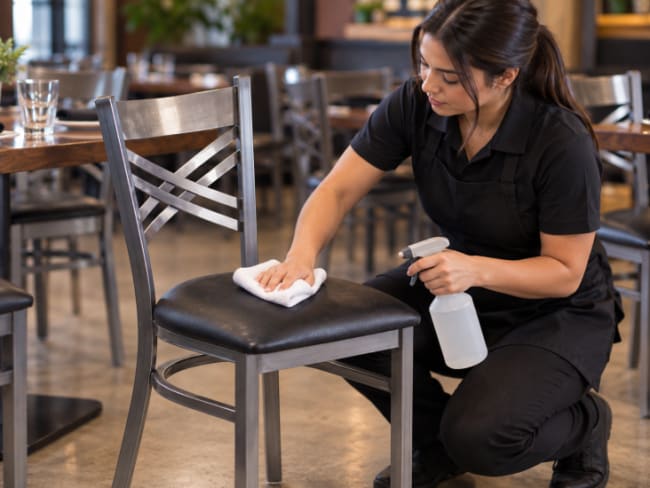
Good chair maintenance is therefore less about dramatic repairs and more about paying attention. Staff interact with the furniture every day and are often the first people to notice when something feels different. A simple routine for cleaning, inspection, and reporting can help catch problems early, keep chairs in service longer, and reduce the chance that a minor issue becomes a safety concern.
Clean for the Material
Match Cleaning Methods to Each Chair Surface
Restaurant chairs often combine wood, metal, upholstery, and other finishes, each with different care requirements. Follow the manufacturer’s instructions and use cleaning products appropriate for the actual materials.
Pay particular attention to seams, edges, joints, and other high-contact areas. Cleaning should remove daily residue without dulling finishes, discoloring upholstery, or allowing excess moisture to collect.
Watch the Stress Points
Catch Loose or Worn Connections Before They Worsen
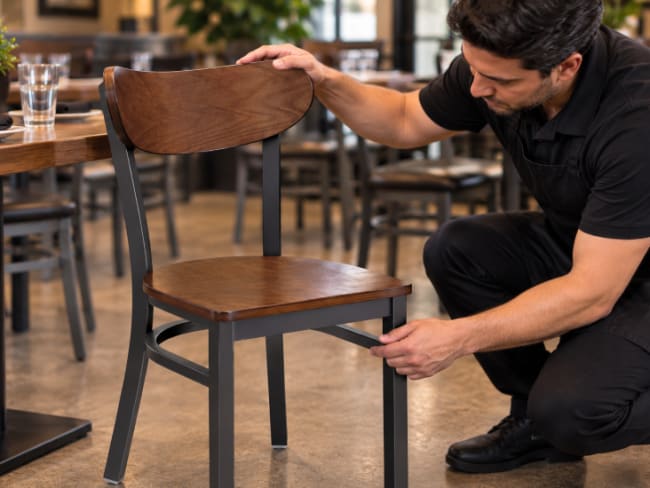
Joints, welds, backs, seat attachments, stretchers, and accessible hardware absorb repeated stress during daily use. Changes such as wobbling, shifting seats, or unusual movement can indicate a loose or worn connection.
Staff should report these changes during cleaning and resetting so problems can be addressed early. Remove a chair from service if it becomes unstable or appears unsafe until it can be inspected and repaired or replaced.
Look at the Floor
Check Glides, Floor Contact, and Chair Stability
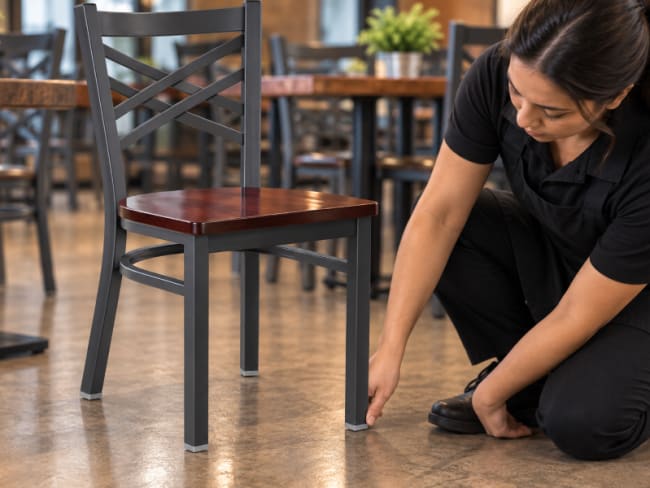
Floor glides take repeated wear whenever chairs are pulled out, pushed in, or moved for cleaning. Worn, loose, or missing glides can increase noise, damage flooring, and change how evenly the chair sits.
Check glides along with the chair’s general stability. All legs should make proper contact with the floor without unexpected rocking, and worn or missing glides should be replaced before they create larger problems.
✓
Design Takeaway
Maintenance Works Best While the Problem Is Still Small
Restaurant chair maintenance is most effective before the issue becomes obvious to the guest. Clean each chair according to its actual materials, pay attention to the parts that carry repeated stress, and treat changes in movement or stability as information rather than background noise.
Small interventions can protect the chair, the flooring around it, and the guest experience. They can also help the restaurant get more useful service from furniture that is otherwise still doing its job.
At this point, we have followed the chair from selection and construction through fit, comfort, floor planning, and daily use. There is only one practical step left before an order is finalized: make sure every important specification has actually been checked.
By now, choosing a restaurant table should feel less like selecting a piece of furniture and more like assembling a specification. The top, base, seating, and floor plan have all been considered separately; before ordering, they need one final review together.
This checklist is designed for exactly that moment. It is not a substitute for individual product specifications, but it can catch the surprisingly easy mistake of getting 11 decisions right and forgetting the 12th.
A
Guest & Comfort
Confirm Who Will Use the Chair
The final check starts with the person who will actually sit in it. Make sure the chair's dimensions, support, and seat construction suit the experience the restaurant expects to provide rather than relying on appearance as a stand-in for comfort.
-
Confirm appropriate seat width, depth, and height.
-
Consider expected visit length and the level of comfort the dining experience requires.
-
Confirm that the seat and back construction are appropriate for the intended use.
Comfort should be specified for the dining experience, not judged from appearance alone.
B
Dimensions & Table Fit
Make Sure the Chair Fits the Table
A chair and table become 1 seating position once they reach the dining room. Check the complete chair against the actual table being specified, including the space above, below, and around it.
-
Verify seat height against table height and available underside clearance.
-
Check overall chair width against the usable table perimeter.
-
Verify arm clearance where applicable, guest legroom, and potential table-base interference.
Use overall chair dimensions, not seat dimensions alone, when checking how the chair fits the table.
C
Construction & Environment
Check How the Chair Is Built
By this point, “commercial” should mean something more useful than a word in the product description. Confirm that the construction, materials, finishes, and individual product specifications support the environment where the chair will actually work.
-
Confirm commercial construction and any applicable product ratings or specifications.
-
Verify that the frame, finish, upholstery, and glides are appropriate for the intended use.
-
For outdoor installations, confirm that the complete chair is approved for exterior use.
“Commercial” and “outdoor” should be supported by the actual product specification, not assumed from the chair's material or appearance.
D
Final Specification
Give the Chair Order One Last Pass
The major decisions may already be made, but the final review is where small specification errors can still be caught cheaply. Compare the order against the furniture that was actually selected and the way the restaurant intends to use it.
-
Confirm quantities, finishes, upholstery, and all selected options.
-
Verify stackability, assembly, replacement components, or other operational requirements where applicable.
-
Confirm cleaning and maintenance requirements before the chairs enter service.
Resolve unanswered specifications before submitting the order. The receiving dock is a poor place to discover that everyone pictured a different chair.
Final Thoughts
Restaurant chairs tend to disappear into the dining room once everything is working properly. Guests notice the meal, the conversation, and the room around them, not the seat height, frame construction, glide condition, or amount of clearance beneath the table. That apparent simplicity is the result of getting a surprising number of small decisions right.
The strongest specifications come from treating those decisions as connected. Construction has to suit the workload. Dimensions have to work with the guest, table, and floor plan. Materials and finishes have to make sense for the environment, and comfort has to support the kind of time the restaurant is asking guests to spend there. None of those choices needs to be extraordinary on its own; they simply need to work together.
A good restaurant chair should ultimately make life easier on both sides of the table. It should give guests a comfortable place to settle in and give the restaurant furniture it can confidently put back into service, day after day. As you compare options, the Affordable Seating restaurant chair collection includes commercial wood, metal, upholstered, stackable, and other restaurant seating options that can be evaluated using the same construction, fit, comfort, and maintenance considerations covered throughout this guide.