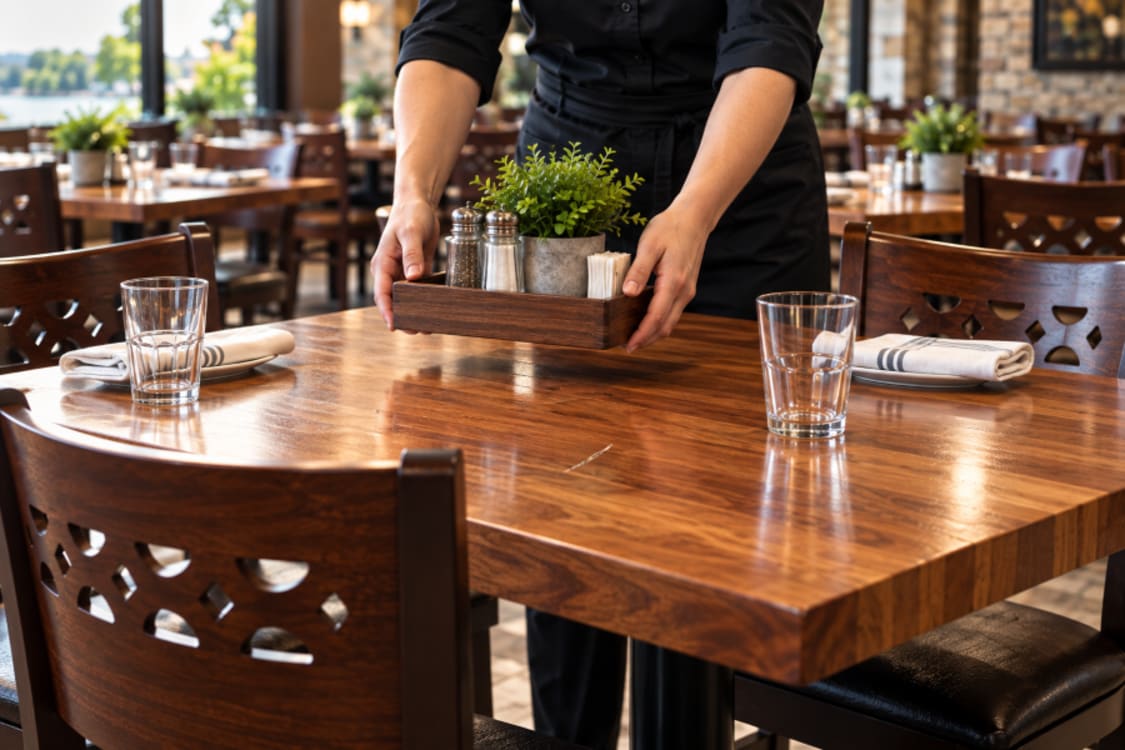
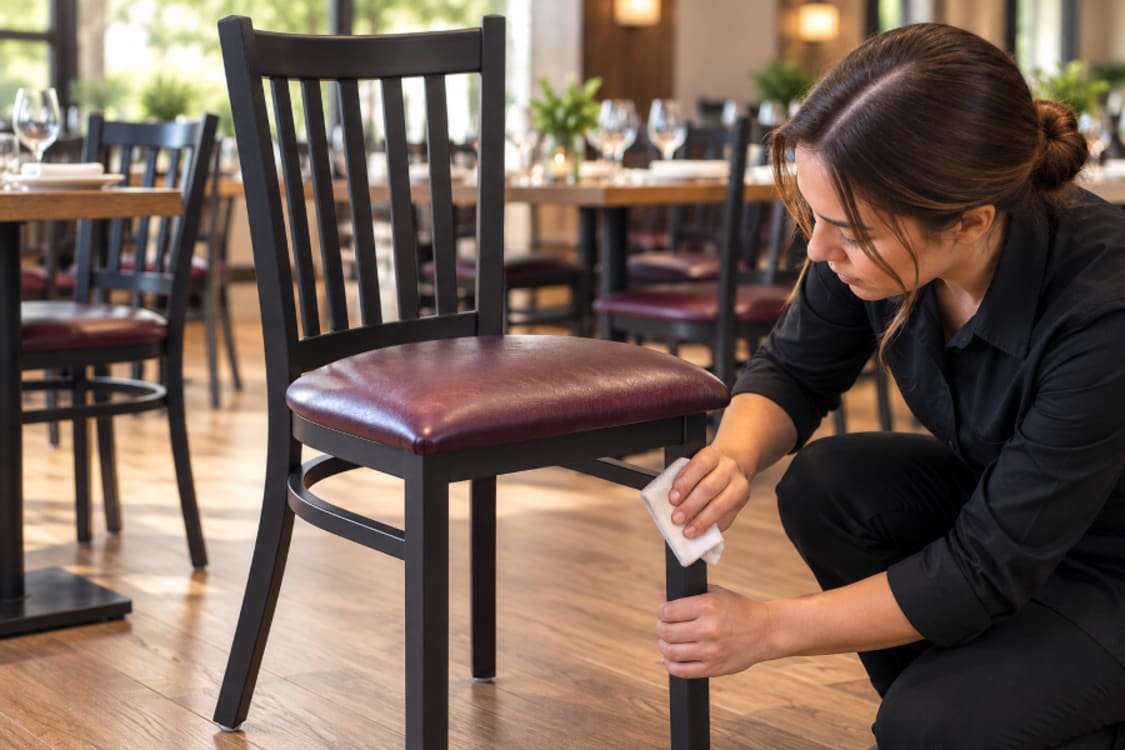
Commercial restaurant furniture deals with constant use. Chairs are moved throughout service, tabletops are wiped repeatedly, upholstery collects food and spills, and every surface is exposed to regular cleaning. The right maintenance routine helps limit unnecessary wear while making it easier to catch developing damage before it becomes a larger problem.
This guide covers practical cleaning and preventive maintenance for the materials commonly used in commercial furniture, along with minor upkeep that can be handled without altering the original construction. Structural damage and significant repairs require a different approach. We’ll begin with wood furniture, where protecting the finish from moisture, heat, abrasion, and improper cleaning is central to routine care.
Maintaining Commercial Wood Furniture
Solid wood restaurant chairs, bar stools, and tabletops are typically protected by a finish that takes the brunt of everyday spills, cleaning, abrasion, and contact. Routine maintenance focuses on preserving that protective surface while keeping food residue, moisture, heat, and physical wear from damaging the finish or reaching the wood beneath it.
Catalyzed polyurethane is a durable clear topcoat used on many commercial solid wood products. It provides substantial protection during normal restaurant service, including the brief moisture exposure that comes with spills and routine cleaning. Maintaining that protection is largely a matter of keeping the surface clean, limiting prolonged exposure, and preventing damage that breaks through the coating.
Cleaning Spills, Grease, and Food Residue
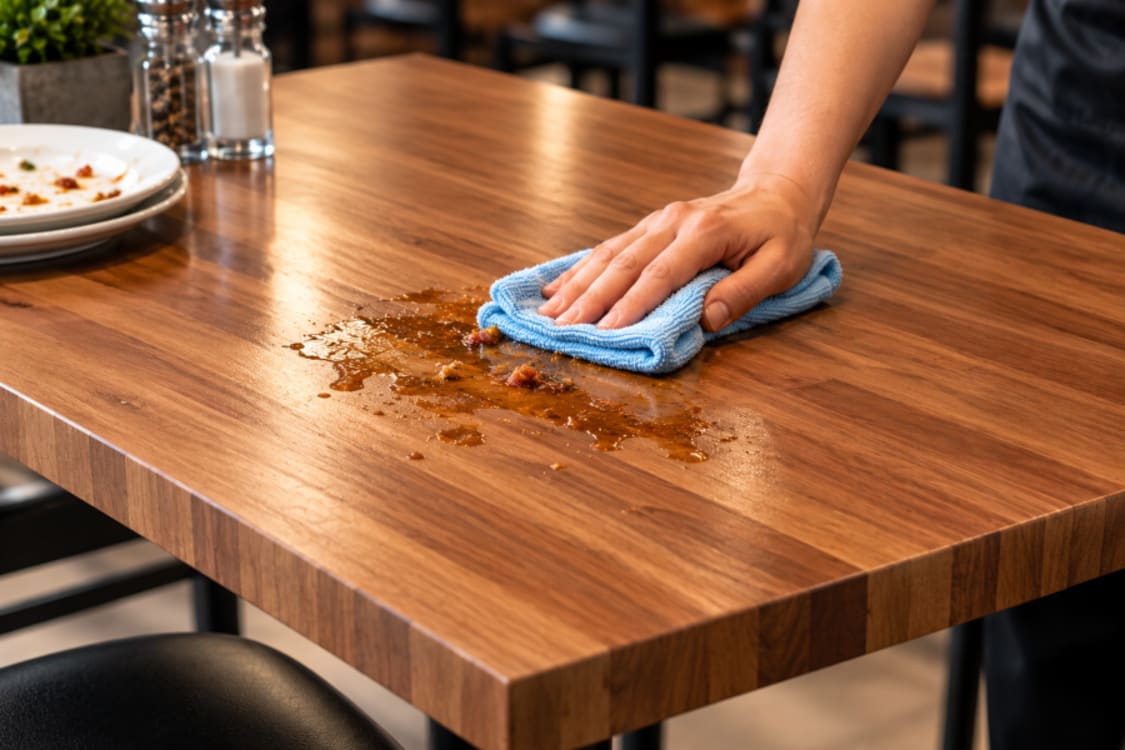
Food oils and restaurant spills may require more than a damp cloth
Wipe spills and condensation promptly with a soft, absorbent cloth. When grease, sauces, meat juices, or other food residue remain, use a soft cloth dampened with a mild soap-and-water solution. Use only enough moisture to clean the surface, remove any remaining soap residue, then dry the wood.
Avoid reaching for a kitchen degreaser simply because the residue is greasy. Degreasers, abrasive cleaners, and aggressive cleaning chemicals can damage protective wood finishes. If mild soap does not remove the residue, check the care instructions for the furniture before moving to a stronger cleaning product.
Preventing Scratches, Chips, and Impact Damage
Protecting the finish helps keep everyday wear from reaching the wood beneath it.
Abrasive scrubbers, dragged tabletop accessories, and repeated contact with other furniture can scratch or chip the protective finish. Lift objects instead of sliding them, and take care when moving chairs and bar stools during cleaning so they are not repeatedly knocked against tables or other hard surfaces.
Light surface marks may only affect the appearance of the finish. A deeper scratch or chip that exposes bare wood deserves more attention because the protective barrier has been broken. Keep the exposed area dry and consult the furniture supplier about an appropriate touch-up or repair method before applying fillers, stains, or coatings.
Protecting Solid Wood From Sunlight and Heat
Protective finishes reduce everyday wear, but they cannot isolate wood from its environment.
Direct sunlight can gradually change the color of wood, stain, and finish. Furniture beside east-facing windows may receive concentrated morning sun, while west-facing windows can receive prolonged afternoon exposure. Window treatments or furniture placement can help reduce sustained exposure where fading or color change is a concern.
A catalyzed polyurethane topcoat improves surface protection, but it does not make the underlying wood or stain immune to light-induced color change. Concentrated heat can also affect a finished surface, so very hot serving items should not be placed directly on solid wood tabletops.
✓
Important Points to Consider
Routine maintenance can address ordinary soil, minor surface wear, and the environmental exposure that comes with restaurant service. Products intended to polish, condition, restore, or refinish wood should only be introduced when they are compatible with the existing finish and appropriate for the furniture.
Cracks, separating joints, loose components or instability fall outside routine wood care and should be evaluated as structural problems. Later in the guide, we'll look more closely at when ordinary maintenance should give way to repair or replacement.
Pro Tips
Wipe spills and condensation promptly instead of allowing moisture to remain on finished wood.
Use a soft cloth and mild soap solution for food oils, grease and routine residue.
Lift tabletop accessories instead of dragging them across the finished surface.
Keep very hot serving items from making direct contact with solid wood tabletops.
Limit prolonged direct sunlight where fading or color change is a concern.
Treat chips or deep scratches that expose bare wood as finish damage rather than ordinary surface wear.
Maintaining Metal Furniture and Finishes
Metal restaurant chairs and bar stools may be crafted with either exposed metal or applied finishes, and each surface requires appropriate care. Powder coat and wood-look finishes, steel, aluminum, and chrome plating respond differently to abrasion, moisture, and cleaning chemicals. A method that removes soil can still cause permanent damage if it scratches a coating, attacks a finish, or alters a plated surface.
For routine maintenance, remove loose debris first and use soft cleaning materials appropriate for the particular finish. The table below outlines the basic care requirements and common problems associated with the metal surfaces used on commercial restaurant furniture.
Cleaning Common Metal Furniture and Finishes
|
Material or Finish
|
Routine Cleaning
|
Avoid
|
Watch For
|
|
Powder-Coated Metal
|
Routine Cleaning
Mild soap or detergent and water with a soft cloth or sponge. Remove residue after cleaning.
|
Avoid
Abrasive cleaners, scouring pads and unverified solvents.
|
Watch For
Chips, deep scratches and worn coating.
|
|
Wood-Grain Metal Finish
|
Routine Cleaning
Mild soap and water with a soft cloth. Remove residue and dry as needed.
|
Avoid
Abrasive pads, polishing compounds and aggressive cleaners.
|
Watch For
Scratches, worn areas and damage to the decorative finish.
|
|
Aluminum
|
Routine Cleaning
Mild soap and water for routine soil. Follow any care requirements for the particular finish.
|
Avoid
Assuming all aluminum finishes tolerate the same cleaner.
|
Watch For
Discoloration, deposits and changes associated with exposure.
|
|
Steel and Cast Iron
|
Routine Cleaning
Clean according to the applied finish and remove lingering moisture.
|
Avoid
Abrasion that damages the finish and prolonged moisture on exposed metal.
|
Watch For
Exposed metal and developing corrosion.
|
|
Stainless Steel
|
Routine Cleaning
Mild detergent and warm water. Rinse with clean water and dry.
|
Avoid
Chloride-containing products, carbon-steel wool and damaging abrasives.
|
Watch For
Deposits, staining and unusual discoloration.
|
|
Chrome-Plated Metal
|
Routine Cleaning
Mild soap, warm water and a soft cloth. Rinse and dry promptly.
|
Avoid
Abrasives, acids and improvised rust-removal methods.
|
Watch For
Pitting, worn plating and corrosion around damaged areas.
|
Aluminum restaurant furniture may use different applied finishes, so maintenance should be based on the finish rather than the underlying metal alone. For powder-coated or wood-grain aluminum frames, use mild soap or detergent and water with a soft cloth for routine cleaning, then remove cleaner residue and dry the surface. Avoid abrasive pads, scouring cleaners and aggressive chemicals that can scratch or damage the applied finish.
Stainless steel and chrome also require their own care rather than a generic approach to “metal.” Mild detergent and warm water work for routine stainless cleaning, followed by rinsing and drying. Chloride-containing cleaners can cause staining or pitting on stainless steel. Chrome plating calls for similarly gentle routine cleaning; abrasive cleaners, aggressive compounds and improvised rust-removal methods can damage the plated surface while attempting to clean it.
Protect the Finish Before Damage Starts
Abrasion Can Create a Larger Problem Than the Dirt Being Removed
Durable metal furniture can still be damaged by the wrong cleaning method. Grit caught in a cloth, abrasive scrubbers and aggressive compounds can scratch a visible finish. Powder coating can be worn or chipped through, chrome plating can be damaged, and scratches in a wood-grain finish cannot simply be polished away.
Pay particular attention to areas that receive repeated contact during service and cleaning. Chair legs can strike table bases, frames can rub during handling, and edges often show wear before broad surfaces do. When cleaning reveals a chip, deep scratch, pitting or exposed metal, stop treating the area as ordinary soil. Small areas of powder-coat damage may be candidates for a compatible touch-up coating, but cleaning itself will not replace the finish that has been lost.
When Surface Wear Needs Attention
Some metal-surface problems become apparent during cleaning rather than before it. The table below uses those visible conditions to distinguish ordinary soil from finish damage, corrosion and other changes that may require a different response.
|
What You See
|
What It Indicates
|
What To Do
|
|
Ordinary Soil or Fingerprints
|
What It Indicates
Surface contamination without visible finish damage.
|
What To Do
Clean with the routine method for the surface using a soft cloth or nonabrasive sponge. Remove cleaner residue and dry the surface.
|
|
Marks Appearing During Cleaning
|
What It Indicates
The mark may be caused by trapped grit, an abrasive cleaning tool or a cleaner that is damaging the finish.
|
What To Do
Stop cleaning and check the cloth, pad and cleaner. Switch to a clean, soft cloth and mild cleaner; if the mark remains, inspect the finish for scratching or chemical damage.
|
|
Chipped or Scratched Powder Coat
|
What It Indicates
The coating has been damaged and the underlying metal may be exposed.
|
What To Do
Keep the area clean and dry. Small areas may be candidates for a compatible color-matched touch-up coating; larger damage or corrosion may require professional refinishing.
|
|
Damaged Wood-Grain Finish
|
What It Indicates
The decorative surface has been physically scratched or worn.
|
What To Do
Keep the area clean and dry. Check with the supplier or manufacturer to determine whether a color-matched touch-up is available for the specific finish.
|
|
Rust on Steel or Cast Iron
|
What It Indicates
Exposed ferrous metal has begun to corrode.
|
What To Do
For minor surface rust, follow the finish manufacturer's approved preparation method, then dry and protect the area with a compatible coating. Extensive corrosion or damage affecting structural components requires professional evaluation. |
|
Pitted or Worn Chrome
|
What It Indicates
The plating may be damaged or deteriorating.
|
What To Do
Clean gently with mild soap and water and dry thoroughly. If the plating is flaking, worn through or deeply pitted, cleaning will not restore it; the part requires replating or replacement to restore the finish.
|
|
Persistent Stainless Discoloration
|
What It Indicates
Deposits, contamination or chemical exposure may be involved.
|
What To Do
Wash with mild detergent, rinse thoroughly and dry. For persistent staining or deposits, use a cleaner specifically suitable for stainless steel; avoid chloride-containing cleaners and carbon-steel cleaning tools.
|
|
Changing Aluminum Appearance
|
What It Indicates
The finish, exposure or chemical contact may be involved.
|
What To Do
Stop using the cleaner associated with the change and return to mild cleaning. If discoloration remains, identify the aluminum finish before further treatment because corrective cleaning varies by finish type.
|
Corrective cleaning should be approached more cautiously than routine cleaning. Material-specific technical guidance sometimes recommends specialized products or procedures for particular deposits, stains or surface conditions, but those treatments are not interchangeable across metal finishes. A procedure intended for stainless steel, for example, should not be assumed safe for chrome plating, powder coat or a decorative finish.
Finish repair deserves the same caution. TIGER Coatings notes that successful powder-coat touch-up depends on factors including surface preparation, compatibility and accurate color and finish matching; its technical guidance also makes clear that a repaired area may not duplicate all of the original powder coating's properties. A localized scratch or chip may therefore be suitable for touch-up, while widespread damage, significant corrosion or a difficult finish match can justify professional refinishing.
For other finishes, the boundary remains more conservative. Missing chrome plating or a deep scratch through a decorative wood-grain finish has changed the surface itself. Cleaning can remove contamination from the damaged area, but it cannot recreate the finish that has been lost. Where appearance, corrosion or continued deterioration is a concern, follow the furniture or finish manufacturer's guidance rather than experimenting with fillers, paints, polishes or other corrective products.
✓
Important Points to Consider
Metal furniture can remain serviceable even as its finish begins to show wear, but surface damage should not be mistaken for ordinary soil. Chips, exposed metal, rust, pitting and permanent changes in appearance call for a different response than routine cleaning. Addressing these conditions early can help limit further finish deterioration and corrosion.
Pro Tips
Remove grit and loose debris before wiping metal surfaces.
Use soft cloths or nonabrasive sponges for routine cleaning.
Remove cleaner residue according to the finish's care instructions.
Check legs, edges and contact points for developing finish wear.
Treat rust, pitting and exposed metal as damage, not stubborn dirt.
Verify compatibility before using specialty cleaners or touch-up products.
Maintaining Laminate, Resin and Composite Surfaces
Laminate, quartz, granite/stone, and resin surfaces are all designed to handle demanding commercial use, but their maintenance requirements are not identical. Routine cleaning is generally straightforward; the differences become more important when staff encounter stubborn residue, heat exposure, damaged edges or a cleaner stronger than the products used for everyday maintenance.
The table below compares routine care for these surfaces and identifies the conditions that require more than ordinary cleaning.
|
Surface
|
Routine Care
|
Avoid
|
If Damage Occurs
|
|
Laminate / Resin
|
Routine Care
Mild soap or detergent and water with a soft cloth or sponge. Remove cleaner residue and dry the surface.
|
Avoid
Abrasive pads, scouring cleaners and incompatible strong chemicals. Avoid excess moisture around damaged laminate seams or edges.
|
If Damage Occurs
Keep damaged laminate edges or seams dry. Swelling, loose edging, significant chips or other physical damage should be evaluated separately from routine cleaning.
|
|
Granite / Natural Stone
|
Routine Care
Clean with a neutral stone cleaner, stone soap or mild detergent and warm water using a soft cloth. Rinse away residue and dry the surface.
|
Avoid
Abrasive cleaners and acidic or otherwise incompatible products. Do not assume every natural-stone surface requires the same sealing schedule.
|
If Damage Occurs
Evaluate chips, cracks or persistent staining separately from routine cleaning. Follow the care guidance for the specific stone before using stain treatments, sealers or repair products.
|
|
Quartz
|
Routine Care
Warm water and mild soap or detergent with a soft cloth or nonabrasive sponge. Remove residue and dry. No routine sealing is required.
|
Avoid
Abrasive cleaners, unverified strong chemicals and direct concentrated heat.
|
If Damage Occurs
Stop using stronger cleaners if discoloration or surface changes appear. Chips or cracks should be evaluated as physical damage rather than treated with additional cleaning.
|
|
Synthetic Wicker / Rattan
|
Routine Care
Remove crumbs and loose debris from between the woven strands, then clean with mild soap and water using a soft cloth or soft-bristled brush. Rinse and dry before service.
|
Avoid
Abrasive scrubbers, aggressive cleaning chemicals and forceful scrubbing that can damage or loosen the weave.
|
If Damage Occurs
Check split, broken or loose strands for continued deterioration. Damaged or unraveling weave requires repair or replacement rather than additional cleaning.
|
The basic cleaning approach may be similar across these surfaces, but their vulnerabilities differ. The following sections examine laminate, quartz, natural stone, resin, synthetic wicker, sintered stone, and tempered glass, with particular attention to the cleaning methods and damage concerns associated with each material.
Protecting Laminate Edges and Seams
Moisture becomes a larger concern when damage exposes the material beneath the laminate.
Laminate provides a durable, easy-to-clean surface, but the finished furniture may also include a separate substrate and edge treatment. According to Formica's laminate care guidance, routine cleaning can be handled with a damp, nonabrasive cloth and mild detergent, while flooding the surface near seams should be avoided because water can penetrate and cause the substrate to swell. Wilsonart likewise recommends mild cleaning and cautions against abrasive and strongly acidic or alkaline cleaners.
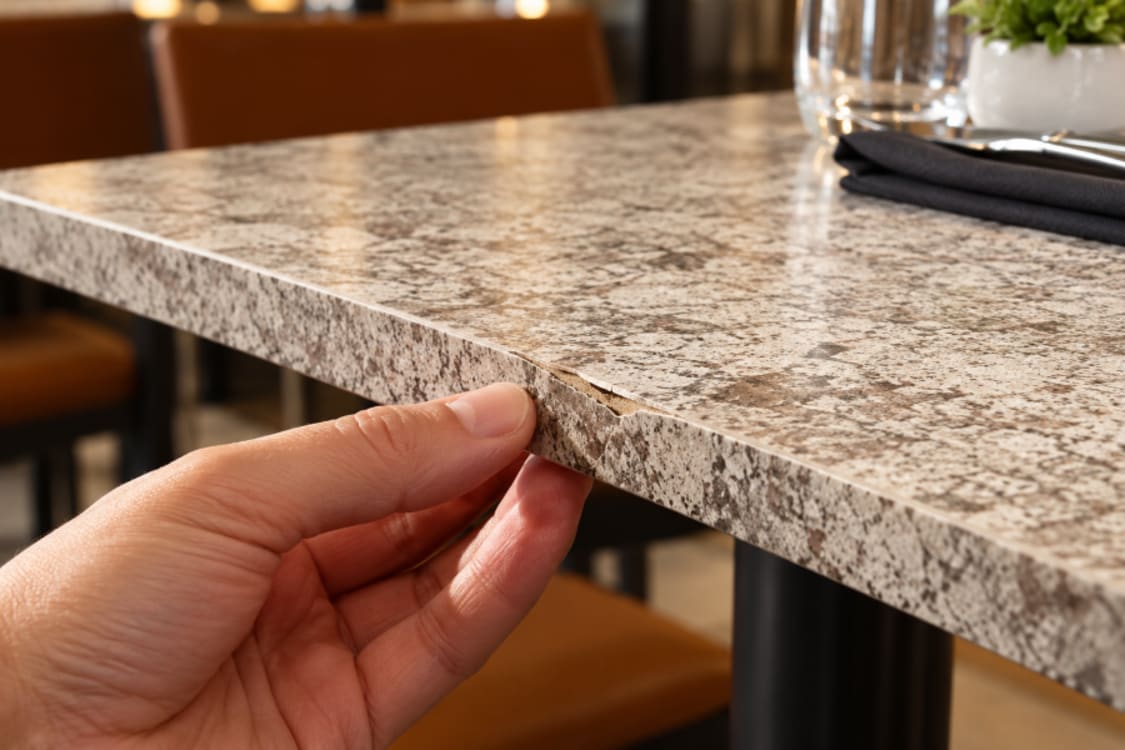
Normal wiping and spill cleanup are not a concern on an intact surface. Pay closer attention when edging becomes loose, a seam opens or a chip exposes the substrate. Keep damaged areas dry and have swelling, loose edging or open seams evaluated rather than trying to correct them with stronger cleaning.
Maintaining Quartz Table Tops
Quartz requires little routine maintenance, but heat and harsh cleaners still deserve attention.
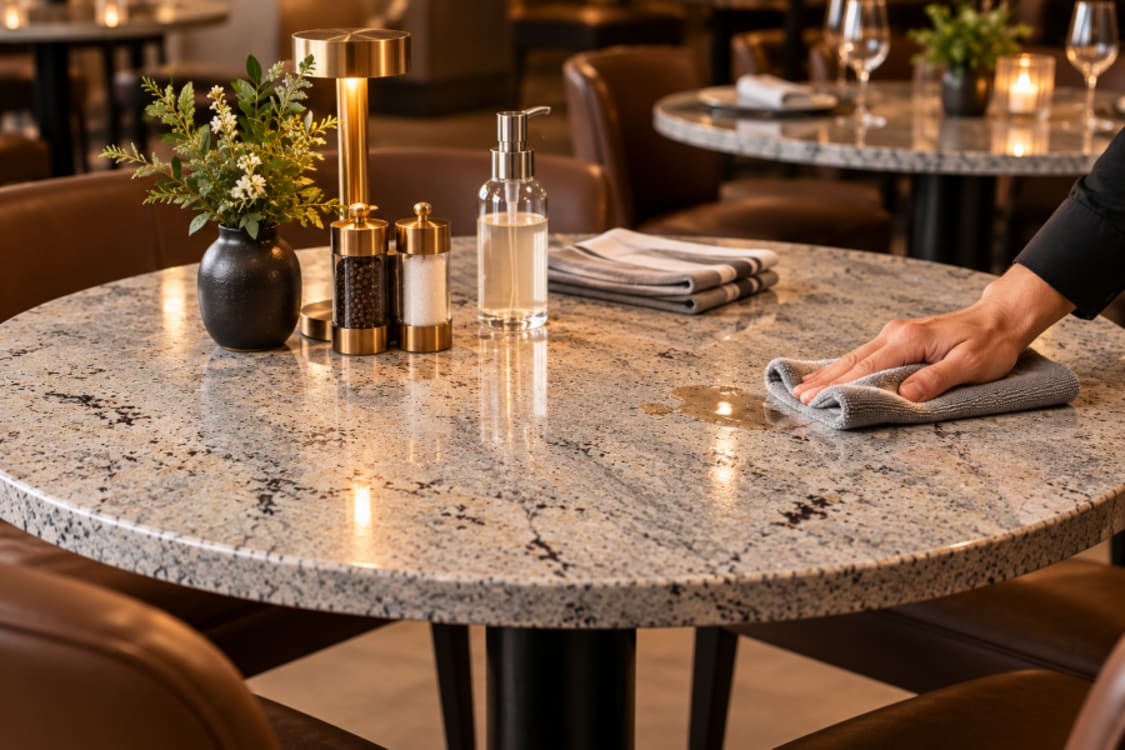
Quartz table tops can generally be cleaned with mild soap or detergent and water using a soft cloth or nonabrasive sponge. Remove remaining cleaner residue and dry the surface after cleaning. Quartz does not require routine sealing, eliminating a maintenance consideration that may apply to some natural-stone surfaces.
Avoid abrasive cleaning tools and unverified strong chemicals. Although quartz provides good heat resistance during normal restaurant use, place a trivet or other heat barrier beneath very hot serving vessels or tabletop equipment rather than exposing the surface directly to concentrated heat.
Maintaining Granite and Natural Stone
Natural stone benefits from simple cleaning, but sealing requirements can vary.
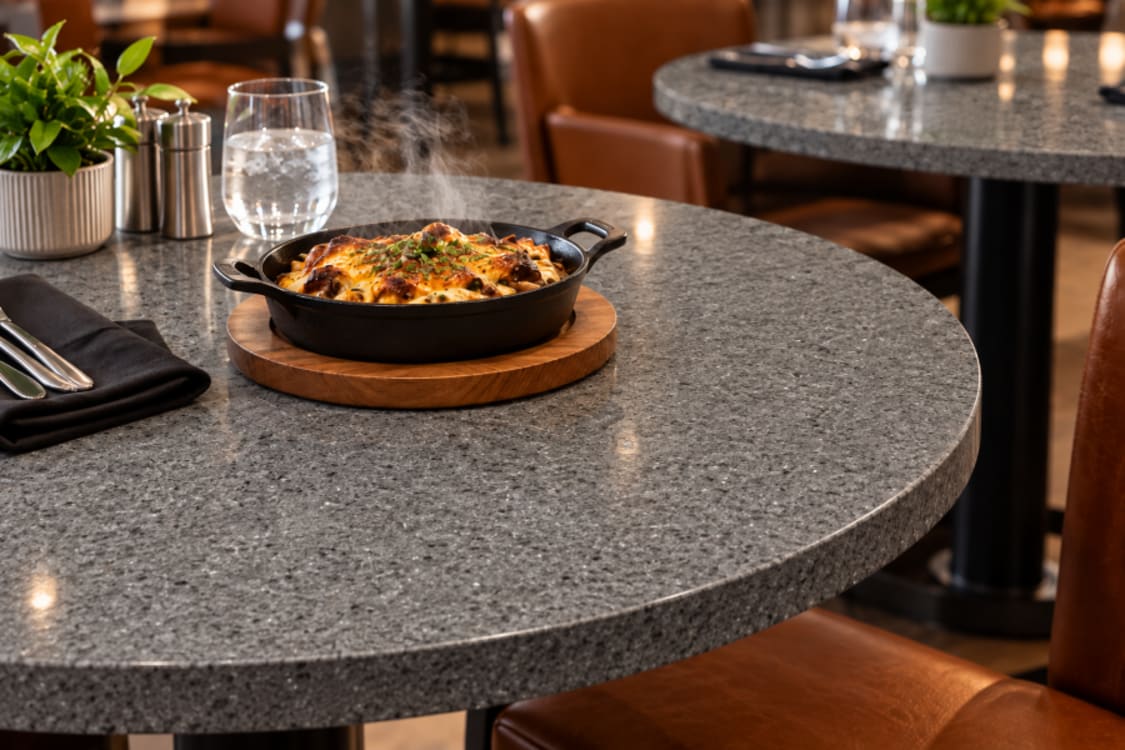
According to the Natural Stone Institute, granite and other natural-stone surfaces can be routinely cleaned with a neutral cleaner, stone soap, or mild dishwashing detergent and warm water. Use a soft cloth, remove cleaner residue, and dry the surface after cleaning. Avoid abrasive cleaners and stronger chemicals unless they are known to be appropriate for the particular stone.
Sealing is not an automatic maintenance requirement for every granite table top. The Natural Stone Institute's sealing guidance explains that some natural stone may benefit from an impregnating sealer for additional stain resistance, while other stone may not require one. Follow the care guidance for the particular table top when determining whether sealing is appropriate.
Maintaining Resin Table Tops
Routine care starts with mild cleaning and nonabrasive tools.
Resin table tops are designed for demanding commercial use and generally require straightforward routine care. Remove spills and food residue with mild soap or detergent and water using a soft cloth or sponge, then remove any remaining cleaner residue from the surface.
Avoid abrasive pads, scouring cleaners and stronger chemicals unless they are known to be compatible with the particular table top. If cleaning produces a noticeable change in gloss, color or surface appearance, stop using the product or method rather than increasing abrasion or chemical strength. Significant chips or other physical damage should be evaluated separately from routine cleaning.
Maintaining Synthetic Wicker and Rattan
Woven construction makes debris removal as important as surface cleaning.
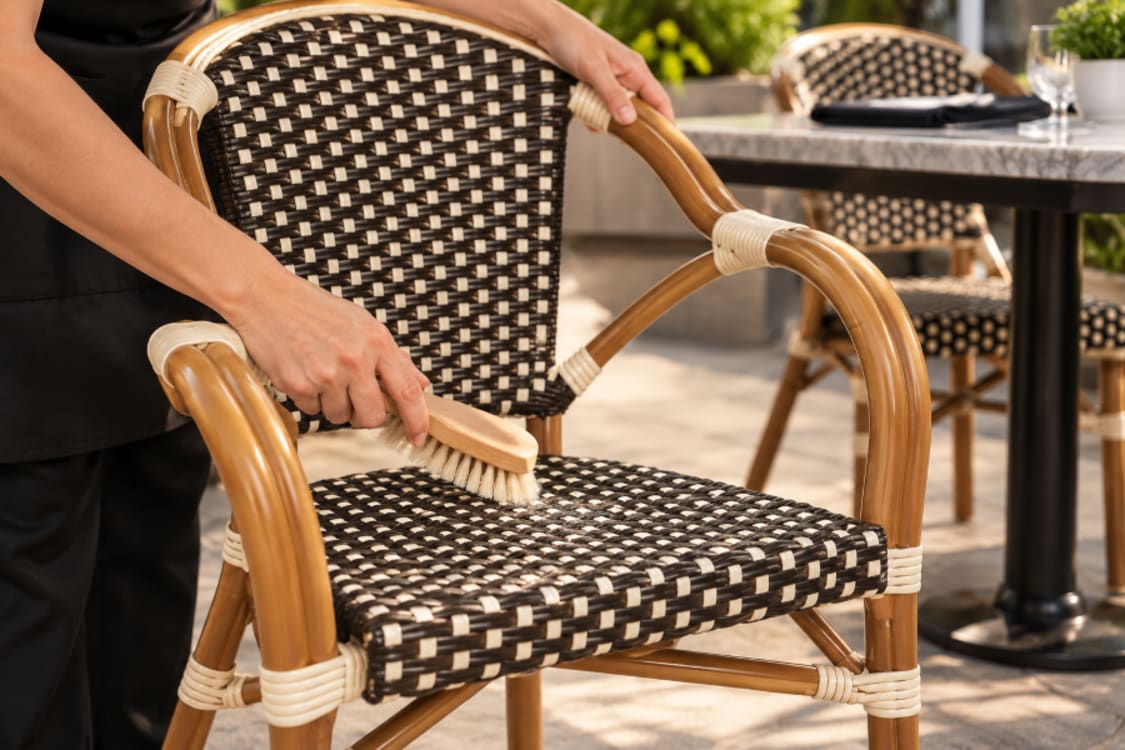
Synthetic wicker and rattan used on commercial patio seating can collect crumbs, dust and outdoor debris between the woven strands. Remove loose material first, then clean with mild soap and water using a soft cloth or soft-bristled brush. Rinse away remaining cleaner and allow the furniture to dry before returning it to service.
Avoid aggressive scrubbing or abrasive tools that can damage the synthetic weave. During cleaning, check for split, broken or loosening strands, particularly around edges and other areas subject to repeated contact. Once the weave itself is damaged, additional cleaning will not correct the problem.
Maintaining Sintered Stone Table Tops
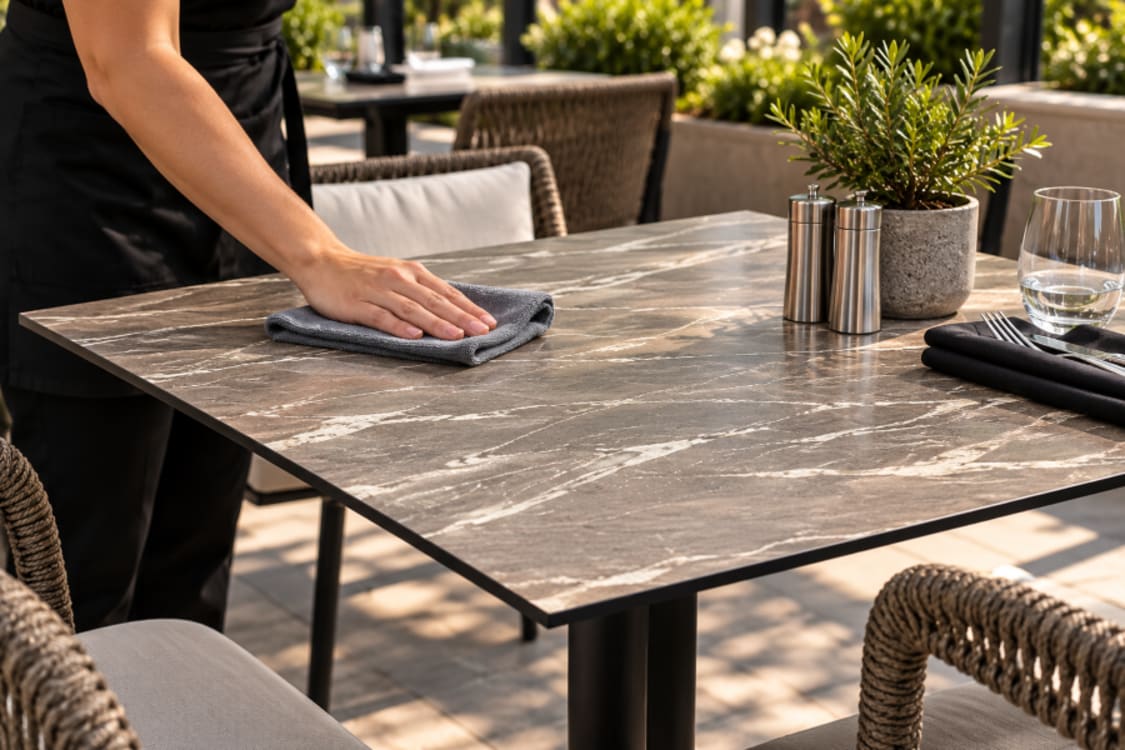
Sintered stone is a dense, nonporous manufactured surface that does not require routine sealing. For everyday restaurant maintenance, clean it with water and a mild or neutral detergent using a soft cloth or sponge, then remove cleaner residue from the surface.
A Note About Tempered Glass
Tempered glass requires little specialized maintenance. Clean tempered glass with a compatible glass cleaner and a soft, lint-free cloth, or use mild soap and water for ordinary food residue. Avoid abrasive pads and powders that can scratch the surface, and protect the edges from impacts when moving or cleaning the table.
If the glass develops a chip or crack, stop using the table and contact the supplier for assessment or replacement. Do not attempt to sand, fill, or repair damaged tempered glass.
✓
Important Points to Consider
Routine cleaning can address most of the soil these surfaces encounter during restaurant service. Chips, cracks, swelling, separating edges or damaged synthetic weave indicate a change in the surface itself and should be evaluated separately from ordinary cleaning.
Commercial Fabric and Vinyl Maintenance
Upholstered restaurant seating needs regular care for a different reason than hard furniture surfaces: food particles, body oils and spills can remain on or work into the upholstery if they are not addressed promptly. Routine maintenance helps limit that buildup while giving staff an opportunity to catch stains and other changes before they become harder to address.
Commercial vinyl and fabric should be treated as separate materials rather than variations of the same cleaning process. Vinyl provides a coated surface that can usually be wiped during routine cleaning, while woven fabrics require dry-soil removal and more controlled treatment of spills and stains. In both cases, the care instructions for the specific upholstery take precedence when a cleaner or treatment goes beyond basic maintenance.
Commercial Vinyl
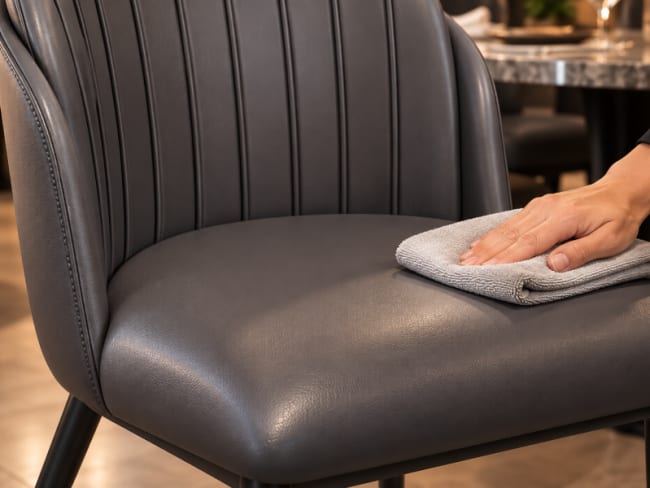
Remove food residue and spills promptly before they remain on the upholstery for extended periods. For routine cleaning, use a soft cloth with a mild soap or cleaner appropriate for the vinyl, then remove remaining cleaner residue as directed. Pay attention to seams and edges where residue can collect during repeated cleaning.
Avoid abrasive tools and unapproved treatments that can alter the surface or leave unwanted residue. Do not apply oils, conditioners, waxes or polishes unless the upholstery manufacturer specifically approves them. Stronger or specialized cleaners should likewise be used only when they are known to be compatible with the particular vinyl.
Commercial Fabric
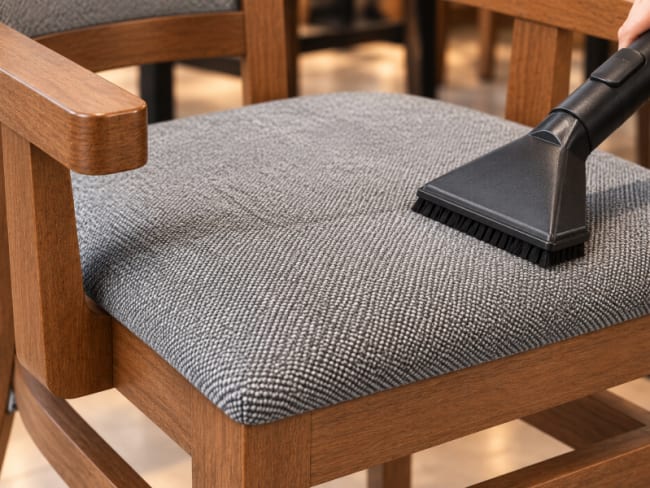
Vacuum commercial fabric regularly to remove crumbs, dust and other dry soil before it works farther into the weave or texture. Address spills promptly by removing excess material without spreading it across a larger area, then follow the cleaning instructions for the specific upholstery. Avoid unnecessarily saturating the fabric, backing or cushioning during spot cleaning.
Stain-resistant upholstery can make routine cleanup easier, but the designation does not mean that every cleaner or treatment is compatible with the material. Use spot-cleaning products only when they are appropriate for the fabric being maintained. When routine vacuuming and approved spot treatment are no longer sufficient, professional upholstery cleaning is a better next step than experimenting with stronger chemicals or aggressive cleaning methods.
When a Stain Persists
Persistent staining is not always a sign that a stronger cleaner is needed. The stain may have penetrated the material, affected its color or finish, or simply require a treatment that falls outside routine maintenance. Repeatedly applying stronger products can make the original problem worse.
Before continuing treatment, consult the care instructions for the specific upholstery and determine whether another approved method is available. If a fabric stain or overall soiling remains after appropriate spot treatment, professional upholstery cleaning may be the better next step.
Upholstery Care on Restaurant Booths
Restaurant booths follow the same fabric and vinyl care methods described above, but crumbs and food debris can collect at the seat-to-back transition. Booths equipped with crumb strips provide an accessible surface where this debris can be wiped away during routine cleaning.
Clean exposed wood or laminate booth components according to the appropriate material-care methods covered elsewhere in this guide.
✓
Important Points to Consider
Upholstery can remain structurally sound even when its appearance has reached the limit of practical maintenance. Permanent staining, discoloration, surface wear or changes in texture may no longer respond to cleaning, and repeated treatment can cause additional damage without improving the result.
At that point, the question shifts from cleaning technique to whether the upholstery is still acceptable for commercial service. Appearance, condition and the extent of the affected area can help determine whether professional cleaning, reupholstery or replacement is the more practical next step.
Pro Tips
Vacuum fabric before dry soil works farther into the upholstery.
Remove food and spills from vinyl as soon as practical.
Treat stains without spreading them across a larger area.
Avoid unnecessary moisture when spot-cleaning fabric.
Use specialty treatments only when approved for the upholstery.
Escalate persistent fabric stains to professional upholstery cleaning.
Glides and Casters
Glides and casters take repeated contact with the floor and can wear out before the furniture itself. Checking them periodically helps catch missing, worn or damaged components before they begin affecting the floor, furniture legs or normal movement.
Glides
Worn or missing glides can expose furniture legs and damage flooring.
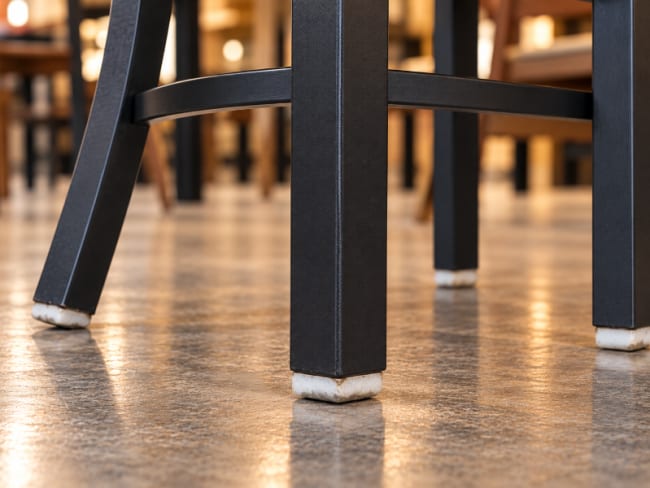
Check chair and table glides for excessive wear, missing pieces or damage that allows the leg itself to contact the floor. A worn or missing glide should be replaced with a compatible part rather than allowing continued use to wear the furniture leg or floor surface.
Casters
Worn or damaged casters can interfere with normal movement.
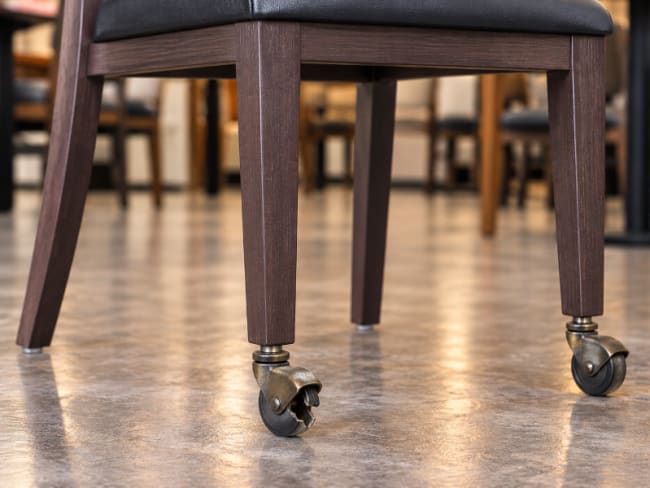
Inspect casters for visible damage, excessive wear, loose attachments, or wheels that no longer roll or swivel normally. Check that brakes hold and release properly where fitted. When replacement is needed, confirm the mounting or stem configuration, load rating, wheel size, suitability for the flooring, and braking function. Use a supplier-approved replacement when available.
Check Connections and Adjustable Components
Periodically inspect seat-to-frame and base-to-top connections, accessible fasteners, mounting hardware, and adjustable table levelers. Check caster attachments and test brakes where fitted. Tighten or adjust serviceable components according to the product instructions. If a connection will not stay secure, or movement comes from a separating joint, cracked frame, or failed weld, remove the furniture from service and contact the supplier for evaluation.
✓
Important Points to Consider
Replacement glides and casters are often available through the company that originally sold the furniture. Identifying the furniture model or providing a photo of the existing component can help the seller confirm which replacement is compatible.
Pro Tips
Replace missing or heavily worn glides.
Check that furniture legs are not contacting the floor directly.
Inspect casters that drag, bind or no longer move normally.
Keep the furniture model or a photo of the original component available when sourcing replacements.
When Maintenance Becomes Repair
Routine cleaning, minor surface care and replacement of normal wear components can address many of the issues commercial furniture develops over time. The boundary changes when damage affects the structure, stability or safe use of the furniture. Structural cracks, failed welds, separating joints and significant instability are signs that the furniture needs evaluation rather than additional cleaning or cosmetic maintenance.
1
Stop and Evaluate
Instability or Unusual Movement
-
Movement may indicate a structural problem. A chair, stool or table that rocks, shifts or flexes because of movement in its structure should be evaluated rather than treated as normal wear.
2
Stop and Evaluate
Cracks or Separating Joints
-
Structural cracks require more than surface maintenance. Cracks in structural components or joints that are pulling apart indicate a problem with the furniture itself, not simply its finish or surface condition.
3
Stop and Evaluate
Failed or Cracked Welds
-
A failed weld is a structural repair issue. Cleaning, coating touch-up or other cosmetic treatment will not restore the damaged connection.
4
Stop and Evaluate
Major Upholstery Damage
-
Extensive damage may require repair or replacement. Large tears, separating upholstery or exposed cushioning have moved beyond ordinary spot treatment and routine cleaning.
5
Stop and Evaluate
Sharp or Exposed Areas
-
Exposed hazards should be addressed before normal use resumes. Broken edges, splintered material, exposed fasteners or other sharp areas should be evaluated before the furniture returns to service.
6
Stop and Evaluate
Significant Tabletop Damage
-
Damage affecting normal use goes beyond routine maintenance. Major cracks, swelling, separation or other conditions that affect the integrity of a tabletop should be evaluated as physical damage.
Attempting a structural repair can also affect warranty coverage. Before drilling, cutting, altering joints, replacing structural components or otherwise modifying the original construction, review the applicable warranty and contact the supplier or manufacturer when appropriate.
Furniture with structural instability, exposed damage or another condition that prevents normal use should be removed from service until its condition can be evaluated. At that point, the decision is no longer about finding a better cleaning method; it is whether repair or replacement is appropriate.
In Closing
Regular maintenance helps commercial furniture remain presentable and functional through the wear that comes with daily restaurant service. Using cleaning methods appropriate for each material, addressing spills and damage promptly, and recognizing the difference between normal wear and more significant damage can help operators get better service from their furniture and make more informed decisions about repair or replacement.
Affordable Seating supplies commercial seating, tables and other furniture for restaurants and foodservice environments. When existing furniture reaches the point where routine maintenance or practical repair is no longer enough, replacing individual pieces or larger groups of furniture becomes part of maintaining a functional dining space. The same attention given to materials, construction and intended use when purchasing new furniture can help make future maintenance more straightforward.